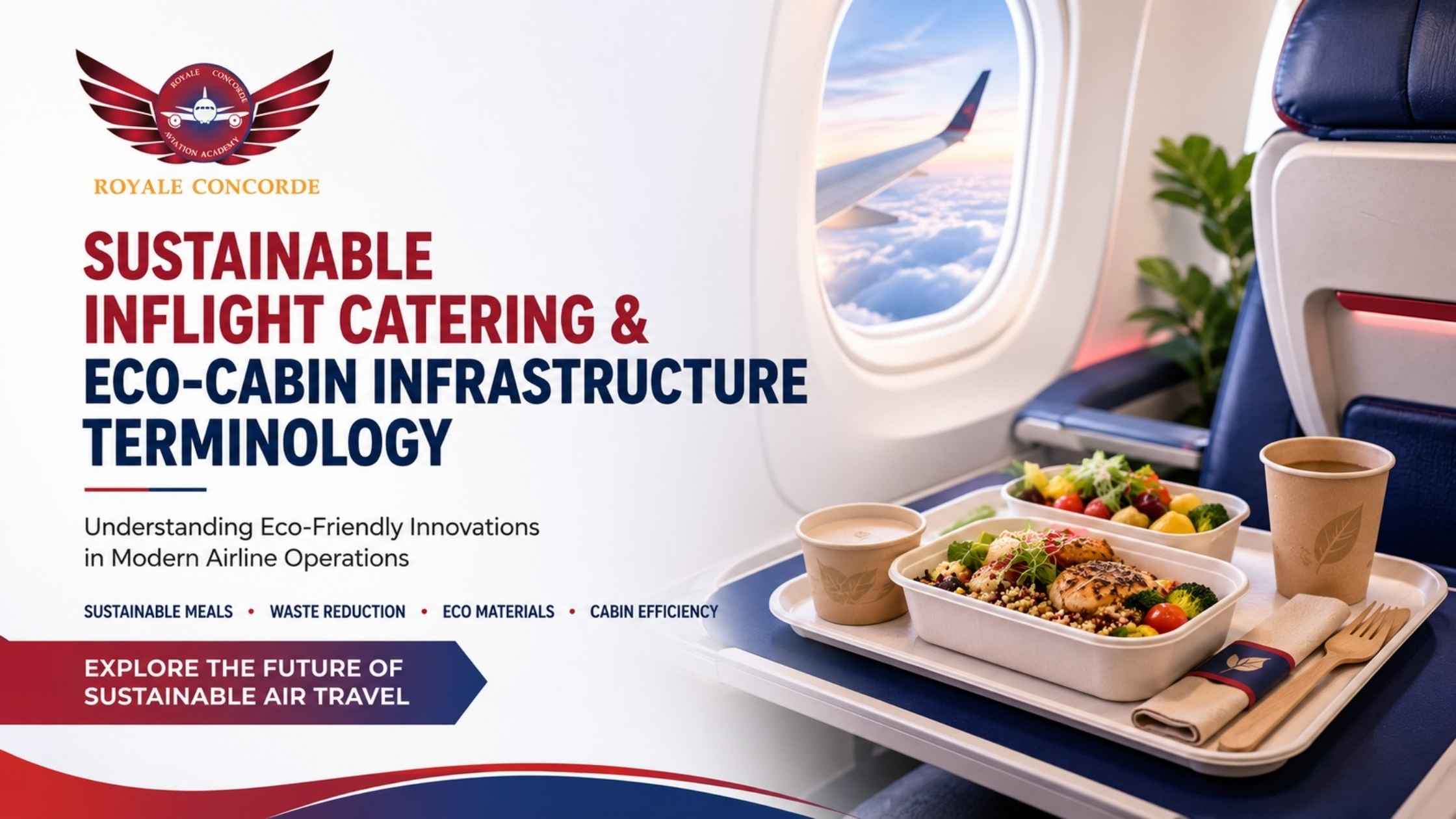
Royale Concorde Aviation Academy in Bangalore is pioneering the next generation of aviation professionals with deep expertise in sustainable inflight catering terms and eco-cabin infrastructure. This comprehensive guide explains vital terminology, their real-world applications, and Royale Concorde Aviation’s unique approach to professional training for a greener future.
What are sustainable inflight catering terms and why do they matter in modern aviation?
Sustainable inflight catering terms refer to the specialized vocabulary and practices adopted by airlines and aviation service providers to minimize environmental impact during onboard food and beverage service. These terms encompass everything from sourcing sustainable ingredients and utilizing composting kits, to implementing closed-loop recycling and adopting lightweight galleys. Understanding this terminology is essential for aviation professionals committed to eco-friendly aviation and meeting global airline sustainability standards.
- Enhances airline reputation and passenger trust
- Reduces operational costs through waste minimization and energy efficiency
- Aligns with global environmental goals and regulatory requirements
Royale Concorde Aviation Academy integrates these concepts into its curriculum, preparing students for the demands of both domestic and international airlines striving toward a sustainable future.
How do green cabin operations redefine the passenger experience?
Green cabin operations encapsulate all onboard procedures and protocols designed to reduce the airline’s environmental footprint. This includes not only food and beverage service, but also cabin cleaning, energy consumption, and waste management.
- Use of biodegradable cleaning agents and reduced-water cleaning methods
- Energy-efficient LED lighting and smart temperature controls
- Digital menus to replace paper, reducing resource use
- Encouragement of passenger participation in recycling programs
At Royale Concorde Aviation Academy, future cabin crew learn how to operate in green cabin environments, mastering the operational and customer-facing aspects that contribute to a more sustainable sky.
What is zero waste airline jargon and how is it shaping global aviation?
Zero waste airline jargon covers the language and strategies employed by airlines aiming to eliminate all waste sent to landfill from their operations. This jargon details the systems, procedures, and materials necessary to create a closed-loop, circular economy onboard.
- Single-use plastics phase-out and compostable packaging adoption
- Segregated waste collection for recycling and composting
- Tracking waste metrics per flight to monitor and reduce landfill contributions
- Passenger education on waste sorting and zero waste practices
Royale Concorde Aviation Academy ensures that students become fluent in zero waste airline jargon, equipping them to support airlines’ sustainability missions from day one of their careers.
Why are lightweight galleys critical for sustainable inflight operations?
Lightweight galleys are aircraft kitchen modules designed with advanced materials to reduce overall aircraft weight, leading to significant fuel savings and reduced carbon emissions. They are central to both operational efficiency and environmental responsibility.
- Constructed with composites, aluminum alloys, and eco-friendly laminates
- Modular design for easier maintenance and lifecycle upgrades
- Integration with energy-saving appliances and smart storage solutions
- Lower weight directly translates to lower fuel consumption
At Royale Concorde Aviation Academy, students receive practical exposure to lightweight galley modules in simulated aircraft environments, learning how these innovations improve both sustainability and service delivery.
How does closed-loop recycling operate within the inflight environment?
Closed-loop recycling in aviation refers to systems designed for the collection, sorting, and reprocessing of materials onboard flights, ensuring that waste is returned to the supply chain as new products or packaging rather than being discarded.
- Collection: Segregating recyclables (plastics, metals, papers) during inflight service
- Sorting: Cabin crew trained to separate waste streams effectively
- Processing: Coordination with airport recycling facilities for material recovery
- Reintegration: Airlines reuse recycled materials for new catering products
Royale Concorde Aviation Academy’s hands-on modules immerse students in closed-loop recycling best practices, making them assets to airlines seeking to complete the circle of sustainability.
What are composting kits, and why are they essential in eco-cabin infrastructure?
Composting kits are onboard tools and protocols for the collection and breakdown of organic waste produced during flights, including food scraps and biodegradable serviceware. These kits enable airlines to convert waste into useful compost rather than landfill mass.
- Specially designed bins and bags for easy organic waste separation
- Education for both crew and passengers on composting procedures
- Coordination with ground handling partners for post-flight compost processing
- Reduction of methane emissions from decomposing waste in landfills
At Royale Concorde Aviation Academy, students are trained in the use and implementation of composting kits, giving them a practical edge in supporting eco-cabin operations.
How do carbon offsets integrate with sustainable inflight and cabin operations?
Carbon offsets are mechanisms by which airlines and passengers can compensate for the greenhouse gas emissions produced during flights by investing in environmental projects such as reforestation, renewable energy, and methane capture.
- Airlines offer passengers the option to purchase carbon offsets during booking
- Offsets are used to balance emissions from inflight catering and cabin operations
- Projects are verified according to global standards (e.g., Gold Standard, VCS)
- Transparent reporting and certification build credibility and passenger trust
Royale Concorde Aviation Academy’s curriculum includes carbon offset strategies, empowering future aviation professionals to communicate and implement these programs with confidence.
What does eco-friendly aviation mean for today’s aviation professionals?
Eco-friendly aviation encompasses all efforts, technologies, and mindsets aimed at minimizing the environmental impact of air travel. This ranges from sustainable inflight catering terms and green cabin operations, to aircraft fuel innovations and responsible sourcing.
- Adoption of sustainable materials and supply chains
- Implementation of waste reduction, recycling, and composting strategies
- Passenger and crew education on eco-conscious travel
- Continuous innovation in aircraft design and in-cabin technology
Royale Concorde Aviation Academy is at the forefront of eco-friendly aviation education, preparing students not just for jobs, but for leadership roles in shaping the sustainable future of aviation.
People also ask: Key questions about sustainable inflight catering and eco-cabin infrastructure
- What are the main sustainable inflight catering terms every cabin crew should know?
-
- Green cabin operations
- Zero waste airline jargon
- Lightweight galleys
- Closed-loop recycling
- Composting kits
- Carbon offsets
- How does Royale Concorde Aviation Academy prepare students for eco-friendly aviation careers?
- RCAA offers industry-aligned training, practical exposure to sustainable inflight and cabin procedures, and mentorship from leaders experienced in global airline sustainability standards.
- Why is Bangalore an ideal location for aviation sustainability training?
- Bangalore is a leading aviation and technology hub in India, offering access to modern infrastructure, airline partnerships, and a growing demand for eco-conscious aviation professionals.
About Royale Concorde Aviation Academy
Royale Concorde Aviation Academy (RCAA) is a premier aviation training institute based in Bangalore, Karnataka. Founded by Shri L. R. Shivarame Gowda, the academy is dedicated to shaping the next generation of aviation professionals with a strong focus on cabin crew training, inflight service excellence, aviation hospitality, and eco-friendly aviation practices.
RCAA’s core training programs are designed to meet airline recruitment standards, combining classroom instruction with practical simulation in industry-leading facilities. The academy’s curriculum integrates sustainable inflight catering terms, green cabin operations, and other eco-cabin infrastructure concepts to prepare students for the evolving demands of global aviation.
With visionary leadership and a commitment to building world-class professionals, RCAA is recognized for its excellence, professionalism, and focus on employability in India’s fast-growing aviation sector.
- Location: Bangalore, Karnataka, India
- Phone: +91 7204805777 / +91 7204806777
- Email: mail@royaleconcordeaviation.com
- Website: https://royaleconcordeaviation.com/
Frequently Asked Questions
What are sustainable inflight catering terms, and how does Royale Concorde Aviation address them?
Sustainable inflight catering terms refer to language and concepts describing environmentally responsible food and beverage services onboard aircraft. This includes sourcing local, organic ingredients, reducing single-use plastics, and minimizing food waste. Royale Concorde Aviation implements these practices by working with regional suppliers, using biodegradable packaging, and optimizing menu planning to minimize leftovers, all while maintaining premium service quality.
How does Royale Concorde Aviation enhance green cabin operations in its fleet?
Green cabin operations involve integrating eco-friendly aviation practices within the cabin environment, such as efficient energy use, waste reduction, and low-emission materials. Royale Concorde Aviation leads in this space by implementing energy-efficient LED lighting, using sustainably sourced materials for soft furnishings, and ensuring that all cabin amenities are reusable or recyclable, creating a greener, healthier onboard experience.
Can you explain zero waste airline jargon and how Royale Concorde Aviation supports this approach?
Zero waste airline jargon encompasses the set of terms and processes aimed at diverting all onboard waste from landfills through reduction, recycling, and composting. Royale Concorde Aviation supports this by introducing comprehensive onboard sorting systems, reusable dishware, and digital menus to cut down on paper waste, striving towards a truly zero waste inflight experience.
What are lightweight galleys and why are they important for sustainability?
Lightweight galleys are aircraft kitchen units made with advanced, lightweight materials that reduce overall aircraft weight. This decreases fuel consumption and emissions. Royale Concorde Aviation utilizes the latest lightweight galley technology, which not only improves fuel efficiency but also provides modularity for easy updates in line with evolving sustainability standards.
How does closed-loop recycling work onboard, and what role does Royale Concorde Aviation play?
Closed-loop recycling is a system where materials are continually reused, ensuring nothing is wasted. Onboard, this means collecting, sorting, and processing recyclable materials so they can be remade into new products. Royale Concorde Aviation has pioneered inflight closed-loop recycling programs, collaborating with airport partners to ensure materials used in flight are collected and returned to the supply chain.
What are composting kits and how are they used in Royale Concorde Aviation’s inflight service?
Composting kits are specialized containers and tools that allow for the collection and processing of organic waste generated during flights. Royale Concorde Aviation provides flight crews with user-friendly composting kits to efficiently separate food scraps and biodegradable items, which are then transferred to certified composting facilities, supporting a circular approach to waste management.
How does Royale Concorde Aviation incorporate carbon offsets into its eco-friendly aviation strategy?
Carbon offsets are credits purchased to compensate for emissions by funding projects that reduce or capture greenhouse gases elsewhere. Royale Concorde Aviation offers carbon offset programs for its flights, allowing passengers and corporate clients to neutralize their travel emissions by investing in renewable energy, reforestation, and community sustainability projects worldwide.
What makes Royale Concorde Aviation a leader in eco-friendly aviation?
Royale Concorde Aviation is committed to eco-friendly aviation through holistic sustainability initiatives. This includes pioneering sustainable inflight catering, investing in lightweight galleys, prioritizing closed-loop recycling and composting, and supporting global carbon offset efforts. Their continuous innovation and partnerships set a benchmark for responsible luxury air travel.