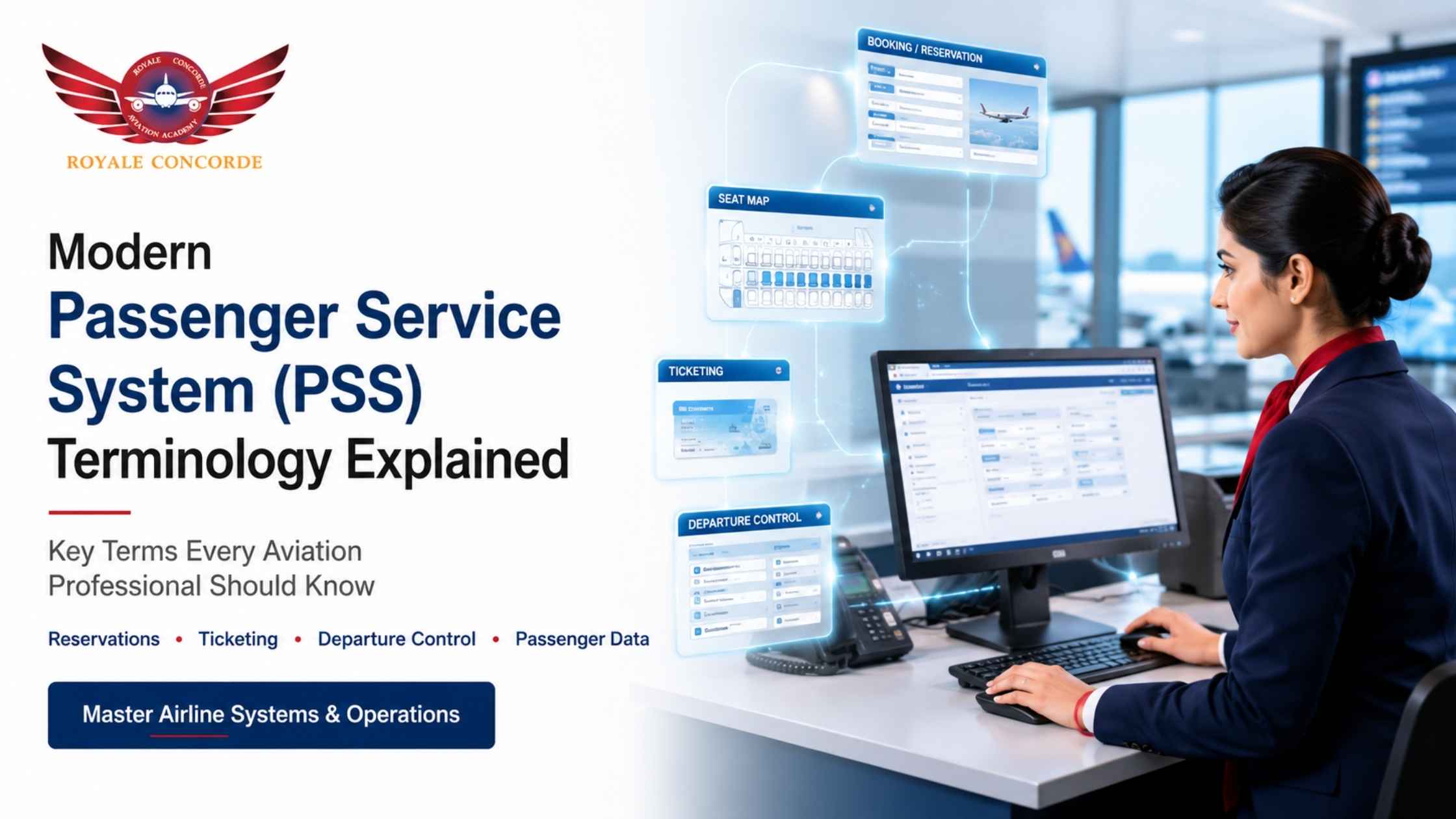
A Passenger Service System (PSS) is the digital backbone that manages airline reservations, ticketing, check-in, and passenger data. At Royale Concorde Aviation Academy in Bangalore, students learn how modern PSS technology shapes seamless passenger journeys and supports airline operations worldwide.
Why Is Understanding Passenger Service System Aviation Terms Essential?
In today’s digital aviation sector, understanding passenger service system aviation is crucial for aspiring professionals. A PSS integrates core airline functions—like reservations, inventory, ticketing, departure control, and customer service—into one unified platform.
Airlines use sophisticated PSS solutions to deliver efficient, safe, and personalized passenger experiences. Whether you aim to become cabin crew, ground staff, or airline operations personnel, mastering these systems is essential for your career growth.
What Are The Key PSS Software Terms Every Aviation Student Should Know?
PSS platforms are built on a foundation of specialized software modules. Here is a breakdown of important PSS software terms you will encounter in airline operations:
- Reservation System: The core booking module where passenger journeys are planned, seats reserved, and tickets issued.
- Inventory Engine: Controls and optimizes the allocation of available seats across different booking classes and channels.
- Departure Control System (DCS): Manages airport check-in, boarding, baggage handling, and real-time passenger tracking.
- Ancillary Services: Optional add-ons like extra baggage, meals, and seat selection, managed through the PSS.
- Customer Profiles: Stores frequent flyer data, preferences, and past travel history to personalize service.
- Integration Modules: Connects the PSS to other airline and airport systems (e.g., loyalty programs, payment gateways).
Royale Concorde Aviation Academy ensures students are fluent in these terms, combining classroom learning with practical case studies and system simulations.
How Does A Departure Control System (DCS) Work In Modern Aviation?
The departure control system (DCS) is a mission-critical component within PSS, automating crucial processes at the airport:
- Passenger check-in (in-person, kiosk, or online)
- Seat assignment and seat mapping
- Document verification (passports, visas, etc.)
- Baggage acceptance and tracking
- Boarding pass generation
- Real-time flight load monitoring
- Boarding process and gate management
At Royale Concorde Aviation, students participate in simulated DCS sessions, gaining hands-on skills in managing passenger flows, troubleshooting issues, and ensuring regulatory compliance.
What Is The Airline Reservation Glossary?
The airline reservation glossary refers to the set of technical terms and abbreviations used in the reservation process. Here are some of the most common, which every future airline professional must know:
| Term | Description |
|---|---|
| PNR (Passenger Name Record) | A unique record containing all travel details for a passenger or group. |
| SSR (Special Service Request) | Requests for special passenger needs (e.g., wheelchair, special meal). |
| OSI (Other Service Information) | Additional information for airline or airport staff (e.g., VIP status). |
| GDS (Global Distribution System) | Platforms like Amadeus, Sabre, and Altea connecting travel agents to airline inventories. |
| Ticketing Time Limit (TTL) | Deadline by which a booking must be ticketed to remain valid. |
| Fare Basis Code | Code that defines fare rules, class, and restrictions. |
How Does Seat Mapping Impact Passenger Experience?
Seat mapping is the process of assigning specific seats to passengers. Airlines use digital seat maps within the PSS and DCS to:
- Visualize the aircraft seating layout
- Offer passengers the option to select preferred seats (window, aisle, extra legroom)
- Optimize load distribution for safety
- Support special needs seating (e.g., for families, medical needs)
Mastery of seat mapping is critical for customer service executives, ground staff, and cabin crew—areas in which Royale Concorde Aviation Academy offers real-world practice.
What Is The Inventory Engine In Airline Operations?
The inventory engine is the module within a PSS that tracks and manages all available seats on every flight. It interfaces with reservation systems and GDS like Amadeus and Sabre to:
- Update seat availability in real-time
- Manage fare classes, quotas, and overbooking scenarios
- Synchronize with sales channels (online, travel agents, corporate bookings)
- Maximize revenue through dynamic pricing
- Integrate with DCS for accurate load and weight calculations
Understanding the inventory engine’s logic is vital for those seeking roles in airline operations, revenue management, and ticketing.
How Do DCS, Amadeus, Sabre, And Altea Shape The Future Of Aviation?
DCS (Departure Control System) is often integrated with leading PSS platforms like Amadeus, Sabre, and Altea. These industry-standard systems:
- Automate and streamline airport and in-flight processes globally
- Enable interline agreements and code-share operations
- Support mobile, web, and kiosk check-in
- Provide data analytics for smarter decision-making
- Enhance security, compliance, and passenger satisfaction
Students at Royale Concorde Aviation Academy get exposure to simulated interfaces of Amadeus, Sabre, and Altea, gaining competitive skills for both Indian and international aviation careers.
Why Is Learning PSS With Real-World Exposure Important?
The aviation industry’s demand for digitally fluent professionals is higher than ever. Airlines expect new recruits to be comfortable with PSS, DCS, and allied systems from day one. At Royale Concorde Aviation Academy:
- Training includes mock check-in counters, DCS practice, and GDS simulations
- Curriculum is updated with the latest PSS software terms and regulatory changes
- Mentorship by industry leaders, including women professionals with both domestic and international experience
- Career guidance on how to leverage PSS knowledge for airline interviews and customer service excellence
This practical approach builds both technical competence and confidence—key aspects for excelling in the aviation sector.
People Also Ask: Common Questions About PSS In Aviation
What is a PSS in aviation and why is it important?
A Passenger Service System (PSS) in aviation is a suite of software tools that manage airline sales, reservations, inventory, ticketing, and passenger processing. It is the foundation for delivering seamless customer experiences, ensuring flight safety, and optimizing revenue.
How does a departure control system (DCS) work?
The departure control system (DCS) automates airport check-in, seat assignment, baggage handling, and boarding. It ensures accurate passenger processing and compliance with safety and regulatory standards.
What are Amadeus, Sabre, and Altea, and how do they differ?
Amadeus, Sabre, and Altea are leading PSS and GDS platforms used by airlines worldwide. They differ in architecture, interface, and airline partnerships, but all provide integrated tools for reservations, inventory, and departure control.
Why do airlines use seat mapping and inventory engines?
Airlines use seat mapping and inventory engines to control seat allocation, manage overbooking, and maximize revenue, while providing customers with seat selection and enhanced travel options.
How does Royale Concorde Aviation Academy prepare students for PSS roles?
Royale Concorde Aviation Academy in Bangalore offers industry-aligned training with real-world PSS simulations, DCS practice modules, and exposure to Amadeus, Sabre, and Altea systems, preparing students for careers as cabin crew, ground staff, and aviation operations professionals.
About Royale Concorde Aviation Academy
Contact: Bangalore, Karnataka, India
Phone: +91 7204805777 / +91 7204806777
Email: mail@royaleconcordeaviation.com
Website: https://royaleconcordeaviation.com/
Frequently Asked Questions
What is a passenger service system aviation solution, and how does Royale Concorde Aviation support airlines with it?
A passenger service system aviation solution is a comprehensive suite of software and tools that manage key airline passenger processes, including reservations, inventory, ticketing, and check-in. Royale Concorde Aviation offers advanced PSS platforms designed for seamless integration, scalability, and modern user experiences. Our solutions streamline daily operations, enhance passenger satisfaction, and reduce operational costs for airlines of all sizes.
Can you explain some common PSS software terms found in airline technology?
Certainly! Some essential PSS software terms include:
– PNR (Passenger Name Record): The digital record of a reservation.
– SSR (Special Service Request): Requests for specific services like meals or assistance.
– Ancillaries: Additional services sold to passengers, such as baggage or seat upgrades.
Royale Concorde Aviation’s team is experienced in demystifying these terms for your staff and integrating them into our user-friendly solutions.
What is a departure control system (DCS), and how does it relate to PSS?
The departure control system (DCS) is a specialized module within a PSS that manages passenger check-in, boarding, and load control. It ensures smooth ground operations by interfacing with airport systems and automating passenger handling. Royale Concorde Aviation’s PSS integrates robust DCS features, allowing airlines to optimize turnaround times and enhance the travel experience.
Where can I find an airline reservation glossary to help understand industry-specific language?
A comprehensive airline reservation glossary is included in Royale Concorde Aviation’s onboarding resources. It covers core industry terminology, from fare classes and GDS codes to ticketing rules—empowering your team to navigate systems like Amadeus, Sabre, or Altea with confidence.
How does seat mapping work in modern PSS platforms?
Seat mapping enables airlines and travelers to view, select, and assign specific seats on an aircraft during booking or check-in. Royale Concorde Aviation’s PSS offers interactive seat maps, dynamic pricing for preferred seats, and real-time updates, ensuring an optimal balance between passenger choice and airline revenue.
What is the role of an inventory engine within a passenger service system?
The inventory engine is the component that manages seat availability and controls the allocation of seats across various sales channels. It’s crucial for yield management and ensures accurate, real-time data for both airline staff and customers. Royale Concorde Aviation’s PSS includes a powerful inventory engine that integrates with global distribution systems (GDS) and supports complex pricing strategies.
What does DCS mean, and how does it benefit airline operations?
DCS stands for Departure Control System, a critical tool for managing check-in, boarding, and flight load processes. By automating and streamlining these tasks, DCS helps reduce errors, enhances passenger flow, and improves on-time departures. Royale Concorde Aviation’s integrated DCS features ensure reliable and swift passenger handling at every airport touchpoint.
How does Royale Concorde Aviation’s PSS compare to legacy systems like Amadeus, Sabre, or Altea?
While established platforms like Amadeus , Sabre , and Altea are widely used, Royale Concorde Aviation’s PSS delivers modern cloud-based flexibility, faster upgrades, and tailored customization. Our solutions are built for today’s digital-first airlines, emphasizing ease of integration, lower total cost of ownership, and a superior user interface.