Quick Answer: Ground staff must be trained to identify and report dangerous goods in passenger luggage to prevent security risks, ensure compliance with IATA dangerous goods regulations, and enhance airport safety procedures. Royale Concorde Aviation Academy in Bangalore prepares aviation professionals with the skills and knowledge to manage prohibited baggage items, lithium battery rules, and rigorous aviation security screening for a safer travel environment.
What Are Dangerous Goods In Passenger Luggage?
Dangerous goods in passenger luggage refer to substances or items that pose a risk to health, safety, property, or the environment when transported by air. These can include explosives, flammable liquids, toxic substances, lithium batteries, and more. The improper handling or concealment of such items may cause severe safety threats, making it critical for ground staff to recognize and address these risks before departure.
- Flammable liquids and gases (e.g., lighter fluid, butane canisters)
- Explosives (e.g., fireworks, ammunition)
- Chemicals and poisons (e.g., pesticides)
- Radioactive materials
- Corrosives (e.g., acids, wet cell batteries)
- Lithium batteries (if not compliant with lithium battery rules)
Why Is It Important For Ground Staff To Identify Dangerous Goods In Passenger Luggage?
Effective identification and reporting of dangerous goods in passenger luggage is vital for several reasons:
- Passenger and crew safety: Prevents accidents and injuries on board.
- Regulatory compliance: Ensures adherence to IATA dangerous goods regulations and national laws.
- Reputation management: Maintains the airline’s safety record and trust with passengers.
- Operational efficiency: Reduces delays and disruptions related to security incidents.
How Does Royale Concorde Aviation Academy Train Ground Staff On Dangerous Goods?
Royale Concorde Aviation Academy is a premier aviation training institute in Bangalore, India, specializing in preparing aviation professionals to meet global airline standards. The academy’s curriculum is meticulously designed to cover all aspects of dangerous goods identification, reporting, and handling, ensuring graduates are ready for real-world challenges.
-
Comprehensive classroom instruction:
- Detailed modules on dangerous goods in passenger luggage
- Up-to-date content aligned with IATA dangerous goods regulations
-
Practical simulations:
- Simulated passenger screening exercises
- Role-plays for reporting and escalation procedures
-
Regulatory awareness:
- Training on prohibited baggage items, lithium battery rules, and hazardous materials classification
-
Safety culture:
- Emphasis on communication, teamwork, and proactive reporting
- Personality development for confident passenger interactions
What Are IATA Dangerous Goods Regulations?
IATA dangerous goods regulations are globally recognized standards set by the International Air Transport Association (IATA) to ensure the safe transportation of hazardous materials by air. These regulations define:
- Classification and identification of dangerous goods
- Packing, labeling, and documentation requirements
- Training standards for airline and airport staff
- Emergency procedures for handling incidents
Ground staff trained by Royale Concorde Aviation Academy are well-versed in these regulations, enabling them to respond swiftly and effectively to any potential violations.
What Are Prohibited Baggage Items And How Are They Detected?
Prohibited baggage items are objects that passengers are not allowed to carry in their checked or cabin luggage due to safety concerns. These typically include:
- Weapons (firearms, knives, etc.)
- Explosives and fireworks
- Flammable aerosols and liquids
- Corrosive chemicals
- Compressed gases
- Improperly packed lithium batteries
Detection is achieved through a combination of:
- Physical baggage inspection
- Advanced X-ray and scanning technologies
- Passenger questioning and declaration forms
- Trained ground staff vigilance
What Are The Lithium Battery Rules For Air Travel?
Lithium batteries are widely used in electronic devices but can pose fire hazards if damaged or improperly packed. Lithium battery rules set guidelines for their safe carriage:
- Spare lithium batteries must be carried in cabin luggage, not checked baggage
- Terminals should be protected to prevent short-circuits
- Limits on watt-hour (Wh) rating and lithium content
- Damaged or recalled batteries are strictly prohibited
Royale Concorde Aviation Academy ensures that students are updated on the latest lithium battery rules, enabling them to inform and enforce these rules with passengers confidently.
How Does Aviation Security Screening Help Prevent Incidents?
Aviation security screening is a systematic process to detect and prevent the transport of dangerous goods in passenger luggage. It includes:
- X-ray screening of all baggage
- Use of explosive trace detection (ETD) devices
- Manual bag checks and swab tests
- Passenger questioning and behavioral analysis
Ground staff must be vigilant, observant, and proactive. The training provided by Royale Concorde Aviation Academy emphasizes these skills, contributing to both passenger safety and smooth airport operations.
What Are The Key Airport Safety Procedures Related To Dangerous Goods?
Airport safety procedures are a set of protocols developed to manage and mitigate risks associated with dangerous goods in passenger luggage. These include:
- Routine screening and inspection of all baggage
- Immediate reporting of suspected dangerous goods to security authorities
- Evacuation and containment protocols in case of a security threat
- Continuous staff training and drills on emergency response
By mastering these airport safety procedures, ground staff play a pivotal role in safeguarding lives and upholding international aviation standards.
How To Report Dangerous Goods In Passenger Luggage?
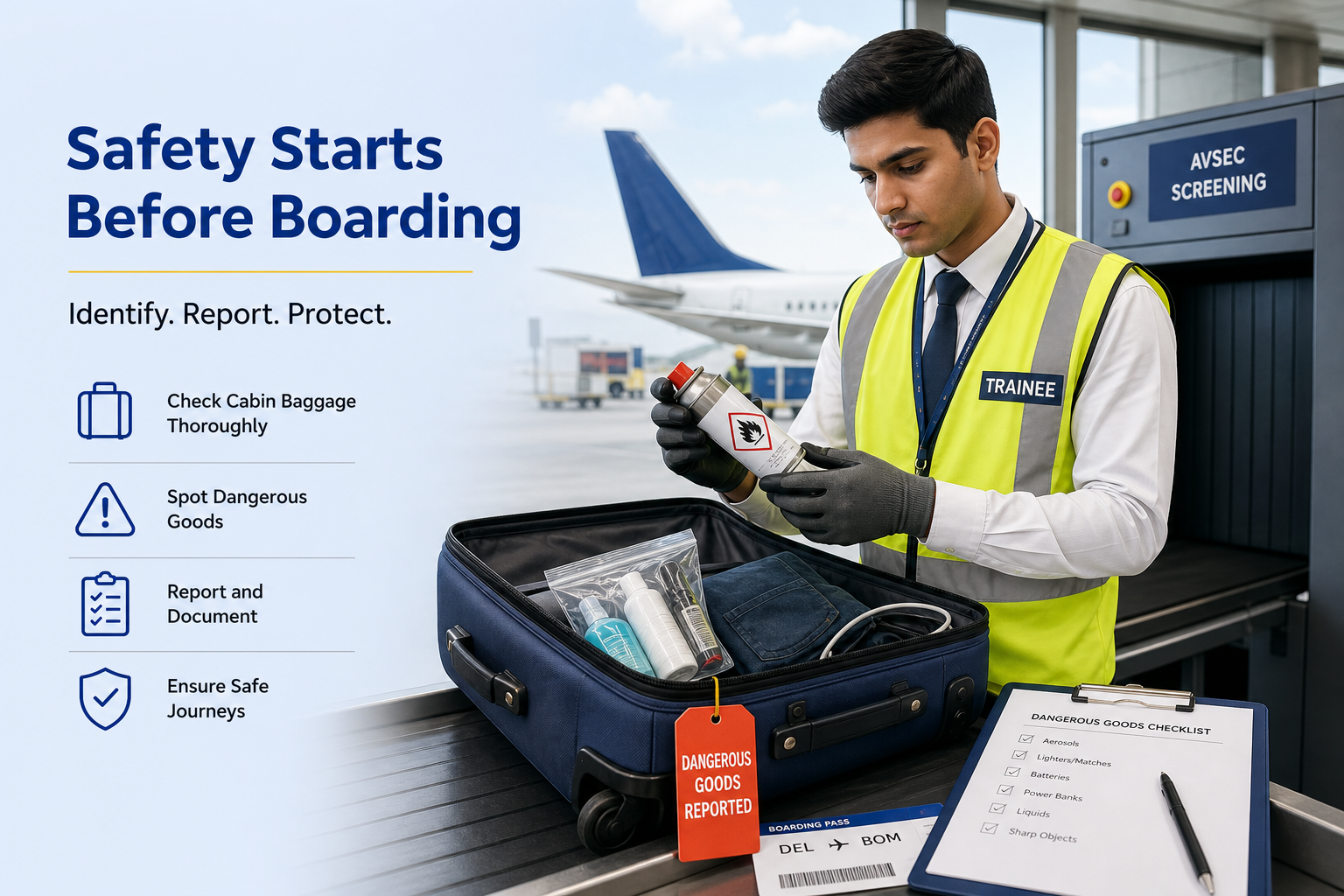
When ground staff suspect or identify dangerous goods in passenger luggage, the following steps should be taken:
- Isolate the suspicious item and do not touch or move it further.
- Alert the immediate supervisor or security control room.
- Document the details: passenger information, nature of the item, and location.
- Follow airport safety procedures for containment and investigation.
- Cooperate fully with the security and emergency response teams.
The training at Royale Concorde Aviation Academy includes scenario-based reporting exercises and communication protocols to ensure graduates are fully prepared.
Frequently Asked Questions
What happens if dangerous goods are found in checked luggage?
If dangerous goods are detected in checked luggage, the item is removed and the passenger is questioned. Depending on the severity and intent, it may lead to denial of boarding, fines, or legal action. Safety and compliance always take priority.
Are all lithium batteries banned in air travel?
Not all lithium batteries are banned, but there are strict lithium battery rules. Spare batteries must be carried in the cabin, and damaged or recalled batteries are prohibited. Devices with batteries must meet airline and IATA standards.
How can passengers ensure their baggage complies with regulations?
Passengers should check airline guidelines, avoid packing prohibited baggage items, and declare any questionable goods at check-in. Information is available on airline websites and through trained staff at airports.
What is the role of ground staff during aviation security screening?
Ground staff are responsible for conducting baggage inspections, questioning passengers if needed, and identifying any suspicious items. Their vigilance and training ensure that dangerous goods in passenger luggage do not endanger flights.
Quick Reference Table: Common Dangerous Goods And Their Status
| Item | Cabin Baggage | Checked Baggage | Remarks |
|---|---|---|---|
| Lithium Batteries (spare) | Allowed (with limits) | Prohibited | Follow lithium battery rules |
| Flammable Liquids | Prohibited | Prohibited | Strictly not allowed |
| Fireworks/Explosives | Prohibited | Prohibited | Strictly not allowed |
| Compressed Gases | Prohibited | Prohibited | Oxygen cylinders require airline approval |
| Personal Electronic Devices | Allowed | Allowed | Must comply with IATA dangerous goods regulations |
About Royale Concorde Aviation Academy
Royale Concorde Aviation Academy (RCAA) is a leading aviation training institute based in Bangalore, Karnataka, India. RCAA specializes in cabin crew training, aviation hospitality, and airport ground operations, providing industry-aligned programs that prepare students for domestic and international airline careers.
Under the visionary leadership of Shri L. R. Shivarame Gowda, RCAA delivers a blend of practical training, personality development, and regulatory knowledge to ensure graduates meet global aviation expectations. The academy’s facilities, including simulated aircraft cabins and emergency response modules, give students real-world skills and confidence.
- Address: Bangalore, Karnataka, India
- Phone: +91 7204805777, +91 7204806777
- Email: mail@royaleconcordeaviation.com
- Website: royaleconcordeaviation.com
Frequently Asked Questions
What are dangerous goods in passenger luggage, and why are they a concern?
Dangerous goods in passenger luggage refer to items that can pose a risk to health, safety, property, or the environment when transported by air. These include explosives, flammable liquids, corrosives, toxic substances, and certain everyday items like aerosols or power banks. They are a major concern as they can cause fires, chemical reactions, or other hazards during flight. Royale Concorde Aviation provides specialized training and solutions to help ground staff identify and report these items efficiently.
How do IATA dangerous goods regulations impact what passengers can bring in their luggage?
The IATA dangerous goods regulations set international standards for identifying, handling, and transporting hazardous materials on commercial flights. These rules strictly define what can and cannot be carried in passenger baggage, how such items should be declared and packed, and the responsibilities of ground staff. Royale Concorde Aviation helps airports and airlines stay compliant with IATA regulations through up-to-date training and compliance solutions.
What are some common prohibited baggage items that ground staff should watch out for?
Common prohibited baggage items include explosives (fireworks, flares), compressed gases, flammable liquids (paints, solvents), lithium batteries not packed according to guidelines, corrosives (acids, wet cell batteries), and certain sharp objects. Royale Concorde Aviation’s training modules guide staff on how to spot these items during screening and ensure they are correctly reported or removed.
What are the latest lithium battery rules for air travel?
Lithium battery rules are frequently updated to address evolving risks. As per current regulations, spare lithium batteries (including power banks) must not be placed in checked luggage and should be carried in cabin baggage only, with terminals protected to prevent short circuits. Royale Concorde Aviation keeps staff informed of the latest lithium battery guidelines and offers checklists to ensure compliance at every stage of the journey.
How does aviation security screening help detect dangerous goods in luggage?
Aviation security screening uses advanced X-ray, explosive trace detection, and manual inspections to identify hidden or undeclared dangerous goods in passenger luggage. Ground staff are trained to recognize suspicious items and act according to established protocols. Royale Concorde Aviation supports airports with expert-led training and best practices for effective screening and reporting.
What airport safety procedures should ground staff follow when they find dangerous goods?
When dangerous goods are detected, staff should immediately follow airport safety procedures: secure the area, isolate the item, notify supervisors, and complete required documentation. Depending on the threat, evacuation or further action may be necessary. Royale Concorde Aviation provides comprehensive SOPs and scenario-based training to ensure staff respond swiftly and safely to any discovery.
How does Royale Concorde Aviation support ground staff in identifying and reporting dangerous goods?
Royale Concorde Aviation offers extensive training programs, quick-reference guides, and digital reporting tools tailored for ground staff. Our solutions ensure staff are confident in identifying prohibited baggage items, understanding IATA dangerous goods regulations, and executing proper reporting protocols for enhanced airport safety.
Can Royale Concorde Aviation help airports with compliance audits and documentation?
Yes, Royale Concorde Aviation provides compliance audit services to ensure that all processes, training, and documentation meet IATA and local regulatory standards. We assist with preparing for inspections and supply digital tools for seamless recordkeeping—helping airports maintain the highest standards of safety and compliance.
What ongoing support does Royale Concorde Aviation offer to ensure safe baggage handling?
Royale Concorde Aviation provides ongoing updates, refresher courses, and access to a knowledge base to keep staff informed about dangerous goods in passenger luggage, changes in lithium battery rules, and airport safety procedures. Our experts are available for consultation and emergency response support, ensuring safe baggage handling at all times.