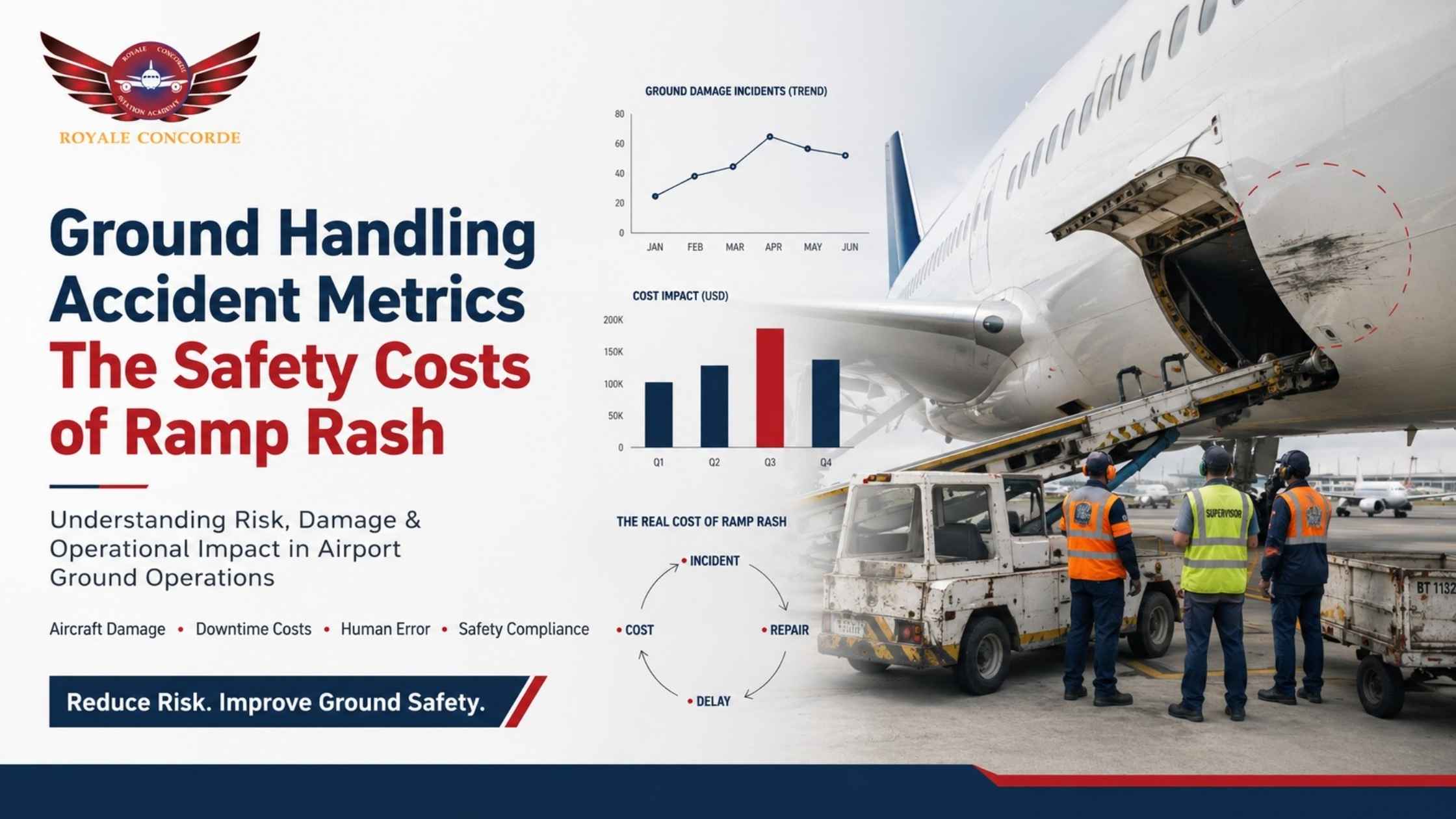
Quick Answer: Ground handling accident metrics, including ramp rash aviation, FOD damage, tug collisions, and aircraft skin dents, are critical indicators of airport ramp safety statistics. These incidents not only impact aircraft safety and operational reliability but also result in significant financial and reputational costs for airlines and ground service providers. At Royale Concorde Aviation Academy in Bangalore, students are trained on the importance of meticulous safety compliance and best practices in airside operations, preparing them to minimize such risks and uphold the highest industry standards.
What Is Ramp Rash Aviation And Why Does It Matter?
Ramp rash aviation refers to the accidental damage caused to an aircraft’s skin or structure, typically while the aircraft is parked or being serviced on the ramp or apron area. It is usually the result of ground handling incidents involving vehicles, equipment, or personnel making contact with the aircraft. Ramp rash can range from minor scratches and dents to more severe damage necessitating costly repairs and even grounding of aircraft.
- Operational Impact: Even small damages can compromise aircraft airworthiness and passenger safety.
- Financial Cost: Repairing ramp rash frequently leads to unplanned maintenance and flight delays.
- Safety Repercussions: Damage left undetected may put future flights at risk, impacting both passengers and crew.
Reducing ramp rash aviation is a key priority for airlines, airports, and training institutes like Royale Concorde Aviation Academy, which focus on instilling a culture of safety, vigilance, and procedural discipline among future aviation professionals.
Understanding Ground Handling Accident Metrics
Ground handling accident metrics are quantitative measures that track the frequency, nature, and severity of incidents that occur during ground handling operations. These metrics provide critical insights for airlines, ground handling agencies, and aviation academies to assess risk, evaluate staff performance, and implement targeted training and safety improvements.
| Metric Type | What It Measures | Why It Matters |
|---|---|---|
| Number of Incidents | Total count of ground handling incidents per month/year | Trend analysis, risk identification, resource allocation |
| Incident Severity Index | Classifies incidents as minor, moderate, or major | Focuses safety efforts on high-risk operations |
| Root Cause Distribution | Breakdown by cause (human error, equipment failure, etc.) | Pinpoints training gaps and process weaknesses |
| Response and Recovery Time | Average time to resolve incidents | Measures operational efficiency and readiness |
| Cost Impact | Direct and indirect costs resulting from incidents | Helps justify investment in safety compliance and training |
At Royale Concorde Aviation Academy, students are taught to understand, interpret, and act on these metrics—ensuring that future ground staff, cabin crew, and managers have the analytical mindset needed for safe airside operations.
What Are The Key Drivers Of Ground Handling Incidents?
Ground handling incidents are typically caused by a combination of human error, inadequate training, equipment malfunction, environmental factors, and rushed procedures. Understanding these causes is essential for designing effective safety training and protocols.
- Human Error: Fatigue, distraction, or lack of awareness can lead to accidental contact with aircraft.
- Equipment Failure: Malfunctioning ground support vehicles or tools can cause unexpected damage.
- Poor Communication: Misunderstandings between ground staff, pilots, and control centers often precede incidents.
- Environmental Factors: Wet, icy, or cluttered ramps increase the risk of accidents.
- Time Pressure: Fast turnarounds and tight schedules sometimes encourage shortcuts, compromising safety compliance.
Royale Concorde Aviation Academy’s curriculum integrates incident analysis and safety management system (SMS) modules, equipping students with the skills to identify, prevent, and respond to ground handling incidents effectively.
How Do Airport Ramp Safety Statistics Reflect Real-World Risks?
Airport ramp safety statistics provide a real-time snapshot of the safety culture at an airport or within a ground handling organization. These statistics are vital for benchmarking performance, identifying trends, and prioritizing risk mitigation strategies.
- Frequent minor incidents may indicate procedural lapses or insufficient training.
- High rates of ramp rash or FOD damage suggest equipment or facility issues.
- Comparisons across airports or companies can reveal best practices or areas needing urgent attention.
At Royale Concorde Aviation Academy, students learn to analyze airport ramp safety statistics to drive continuous improvement in airside operations and foster a proactive approach to ground safety.
What Are FOD Damage Metrics And Why Should Aviation Professionals Care?
FOD damage metrics track incidents caused by Foreign Object Debris (FOD) on the apron or runway. FOD includes anything not part of the aircraft or airport infrastructure—tools, luggage straps, stones, or even loose hardware. Such debris can cause punctures, dents, or critical damage to aircraft engines and systems.
- FOD-related incidents can cost airlines millions in repairs and indirect losses.
- Metrics help identify FOD hotspots and the effectiveness of ramp housekeeping efforts.
- Regular FOD walks and awareness campaigns are hallmarks of a strong safety culture, as practiced in Royale Concorde Aviation’s training simulations.
Future aviation professionals are trained to be vigilant about FOD, understanding that even a small oversight can escalate into a major incident.
How Do Tug Collisions And Aircraft Skin Dents Affect Aviation Safety And Costs?
Tug collisions occur when ground vehicles used to tow or push aircraft accidentally strike the fuselage, wings, or landing gear. These collisions are a leading cause of aircraft skin dents and structural damage.
- Even minor dents can affect aerodynamics or signal deeper structural issues.
- Each incident can ground an aircraft, causing schedule disruptions and significant repair costs.
- Insurance premiums and regulatory scrutiny increase for repeat offenders.
At Royale Concorde Aviation Academy, future ground handlers and supervisors are trained in precision vehicle operation, situational awareness, and incident reporting to minimize tug collisions and prevent aircraft skin dents.
What Are The Best Practices For Safety Compliance In Airside Operations?
Safety compliance is the adherence to established safety standards, regulations, and best practices in aviation. In airside operations—the area of the airport restricted to aircraft and support vehicles—this means a strict commitment to protocols.
- Regular training and re-certification for all ground staff
- Clear marking and segregation of operational areas on the ramp
- Use of personal protective equipment (PPE) and high-visibility gear
- Routine safety audits and incident reviews
- Prompt reporting and root-cause analysis of all ground handling incidents
- Implementation of latest technology (e.g., proximity sensors, FOD-detection systems)
At Royale Concorde Aviation Academy, students are not only taught the technicalities of safety compliance, but also the mindset of responsibility, continuous learning, and proactive risk management required for safe and efficient airside operations.
How Does Royale Concorde Aviation Academy Prepare Students For Safe Ground Handling?
Royale Concorde Aviation Academy, based in Bangalore, is India’s premier aviation training institute. The academy stands out for its industry-aligned curriculum, practical simulations, and career-focused approach, ensuring graduates are job-ready for the evolving demands of the aviation sector.
- Simulated Training: State-of-the-art cabin and ramp mock-ups immerse students in real airport scenarios.
- Incident Analysis: Students review actual ground handling accident metrics, fostering a culture of learning from real-world data.
- Safety Drills: Regular emergency and FOD management drills reinforce procedural discipline.
- Expert Faculty: Mentorship from experienced pilots, ground staff, and air hostess trainers ensures a holistic understanding of ramp safety.
- Placement Support: The academy’s strong industry interface helps students secure roles in ground handling, airport management, and safety compliance across leading airlines and airports.
By emphasizing the importance of ramp rash aviation, FOD damage metrics, and the full spectrum of ground handling incidents, Royale Concorde Aviation Academy produces graduates equipped to lead India’s aviation industry into a safer, more efficient future.
Frequently Asked Questions On Ramp Rash And Ground Handling Accidents
What is the most common cause of ramp rash aviation?
The most common cause of ramp rash aviation is accidental contact between ground vehicles or equipment and aircraft during airside operations. Human error, poor visibility, and time pressure are frequent contributing factors.
How do FOD damage metrics impact airline safety?
FOD damage metrics highlight the frequency and severity of incidents caused by foreign objects on the ramp. High FOD metrics signal a need for better housekeeping and staff vigilance, as FOD can lead to catastrophic engine or airframe damage.
Why are tug collisions and aircraft skin dents so expensive?
Tug collisions and aircraft skin dents often require aircraft to be taken out of service for inspection and repair. This leads to direct repair costs, lost flight revenue, and potential regulatory penalties—making prevention a financial and safety imperative.
How are students at Royale Concorde Aviation Academy trained to prevent ground handling incidents?
Students receive hands-on training in real-world ramp scenarios, learn industry safety protocols, and develop an analytical approach to ground handling accident metrics. The academy’s curriculum fosters expertise, ethical responsibility, and confidence.
About Royale Concorde Aviation Academy
Royale Concorde Aviation Academy is a leading aviation training institute in Bangalore, Karnataka, specializing in cabin crew training, air hostess programs, aviation hospitality, and airport ground operations. Founded by Shri L. R. Shivarame Gowda, RCAA is committed to shaping the next generation of aviation professionals through a blend of world-class curriculum, practical exposure, and professional mentorship. With a focus on safety, discipline, and holistic career development, the academy ensures its graduates are ready for the challenges and opportunities of India’s fast-growing aviation sector.
- Location: Bangalore, Karnataka, India
- Contact: +91 7204805777 / +91 7204806777
- Email: mail@royaleconcordeaviation.com
- Website: royaleconcordeaviation.com
Connect with Royale Concorde Aviation Academy on Facebook, Instagram, X (Twitter), and YouTube.
Frequently Asked Questions
What is “ramp rash” in aviation and why is it a significant concern?
Ramp rash aviation refers to physical damage inflicted on an aircraft during ground handling operations, whether from vehicles, equipment, or personnel. This damage—ranging from minor scratches and paint scuffs to more serious issues like aircraft skin dents—can compromise safety, increase repair costs, and result in operational delays. Addressing ramp rash is essential for maintaining airside operations efficiency and ensuring compliance with strict aviation safety standards.
How do ground handling incidents impact airport ramp safety statistics?
Ground handling incidents are a leading contributor to negative airport ramp safety statistics. Every year, thousands of such incidents—including tug collisions, FOD (Foreign Object Debris) damage, and accidental contact with ground equipment—are reported globally. These events not only affect aircraft integrity but also influence insurance premiums, regulatory scrutiny, and the reputation of airports and service providers.
What are FOD damage metrics and how do they relate to ramp rash?
FOD damage metrics quantify the frequency, cost, and severity of incidents caused by foreign object debris on the ramp. FOD can lead to ramp rash by damaging aircraft surfaces or engines, resulting in costly repairs and increased downtime. Monitoring these metrics helps identify trends and prioritize prevention strategies, which Royale Concorde Aviation integrates into its safety solutions.
How does Royale Concorde Aviation help reduce tug collisions and other ramp accidents?
Royale Concorde Aviation employs advanced training, real-time monitoring, and the latest technology to minimize tug collisions and related accidents. Their comprehensive programs include ramp personnel certification, clear visual signaling systems, and proactive risk assessments, all aimed at upholding the highest safety compliance standards in airside operations.
What types of aircraft skin dents are most common, and what are their risks?
The most common aircraft skin dents result from contact with service vehicles, baggage carts, and ground support equipment. While some dents are superficial, others can impact structural integrity and require detailed inspection. Unaddressed, these dents may lead to safety hazards or regulatory violations. Royale Concorde Aviation’s robust inspection protocols ensure even minor damage is swiftly identified and rectified.
How does Royale Concorde Aviation use data to improve ground safety?
Data-driven decision-making is fundamental to Royale Concorde Aviation’s approach. By tracking detailed ground handling accident metrics—including FOD damage metrics and ramp rash occurrences—they identify high-risk areas and adapt training and procedures. This continuous improvement cycle helps lower incident rates and elevates overall safety compliance on the airport ramp.
What operational improvements does Royale Concorde Aviation offer for airside operations?
Royale Concorde Aviation offers a suite of operational enhancements for airside operations, including real-time ramp surveillance, advanced vehicle tracking, and automated incident reporting. These solutions streamline communication, reduce human error, and ensure rapid response to any ground handling incidents, effectively minimizing ramp rash aviation risks.
Why is safety compliance so critical in ground handling and ramp operations?
Safety compliance is essential in ground handling and ramp operations to protect personnel, passengers, and aircraft. Regulatory bodies require strict adherence to safety protocols, and non-compliance can result in severe penalties, higher insurance costs, and reputational harm. Royale Concorde Aviation’s solutions are designed to ensure clients consistently meet or exceed all safety compliance obligations.
How can airports and operators use airport ramp safety statistics to drive improvement?
By analyzing airport ramp safety statistics, operators can identify patterns in ground handling incidents, ramp rash aviation cases, and FOD damage metrics. This insight enables targeted interventions, such as focused training or equipment upgrades. Royale Concorde Aviation supports clients by providing actionable reports and tailored safety strategies based on the latest data and industry best practices.