Royale Concorde Aviation Academy is Bangalore’s premier aviation training institute, specializing in preparing students for successful careers in the global aviation sector, including airport ground handling, cabin crew, and airport operations.
What Are The Most Important Airport Ground Handling Terms?
Understanding airport ground handling terms is crucial for anyone aspiring to work in airport operations or as a member of ground staff. These terms form the foundation of communication and safety on the airport apron, ensuring smooth, efficient, and incident-free aircraft turnaround. At Royale Concorde Aviation Academy, we ensure our students master this lingo, setting them apart as industry-ready professionals.
- Airport ground handling terms cover every aspect of the turnaround process, passenger movement, and aircraft servicing.
- Proficiency in these terms enhances safety, reduces errors, and fosters teamwork.
- They are vital for careers in ramp operations, passenger services, and aviation logistics.
Why Is Apron Vocabulary Essential In Airport Operations?
Apron vocabulary refers to the specialized words and phrases used on the aircraft parking and movement area, known as the apron or ramp. Mastery of apron vocabulary is vital for effective coordination between ground handlers, pilots, and airport staff.
For instance, terms like FOD (Foreign Object Debris), marshalling, and pushback tug are part of daily apron conversations. At Royale Concorde Aviation, students learn apron vocabulary through practical simulations and real-world scenarios, preparing them for high-pressure environments at busy airports.
- Reduces miscommunication during high-traffic periods
- Ensures compliance with global safety standards
- Facilitates quick, coordinated aircraft movements
Ramp Agent Glossary: What Do Ground Staff Need To Know?
The ramp agent glossary is a collection of key terms every ramp agent must know to perform their duties efficiently on the apron. Ramp agents are responsible for guiding aircraft, loading and unloading baggage, and supporting turnaround operations.
| Term | Definition | Why It Matters |
|---|---|---|
| FOD | Foreign Object Debris—any loose object or debris on the apron that can damage aircraft. | Critical for safety; regular FOD checks prevent costly damage and incidents. |
| Marshalling | The process of guiding aircraft using hand signals or wands. | Ensures safe and precise aircraft parking and movement. |
| Pushback tug | A specialized vehicle used to push an aircraft backward from the gate. | Essential for safe, controlled aircraft departure from parking stands. |
| Chocks | Wedges placed in front of and behind aircraft wheels to prevent movement. | A basic safety procedure before and after aircraft arrival. |
| GPU | Ground Power Unit—provides electrical power to aircraft on the ground. | Keeps systems running without using onboard engines, saving fuel and emissions. |
| Passenger boarding bridge | The moveable bridge connecting the terminal to the aircraft door. | Enables safe, weather-protected passenger embarkation and disembarkation. |
At Royale Concorde Aviation Academy, our ramp agent glossary training includes hands-on demonstrations and rigorous safety drills, ensuring students not only memorize but truly understand and apply each term in real airport environments.
What Is FOD And Why Is It A Critical Apron Term?
FOD, or Foreign Object Debris, refers to any loose object—stones, tools, rubbish, or even stray luggage tags—on the apron that could be ingested by jet engines or damage aircraft systems. FOD prevention is a top priority at every airport globally.
- Daily FOD walks are mandatory for ramp agents and ground staff.
- Failure to control FOD can result in multi-crore damages and safety breaches.
- Royale Concorde Aviation students are trained to identify, report, and remove FOD as part of their operational routine.
How Is Marshalling Used In Airport Operations?
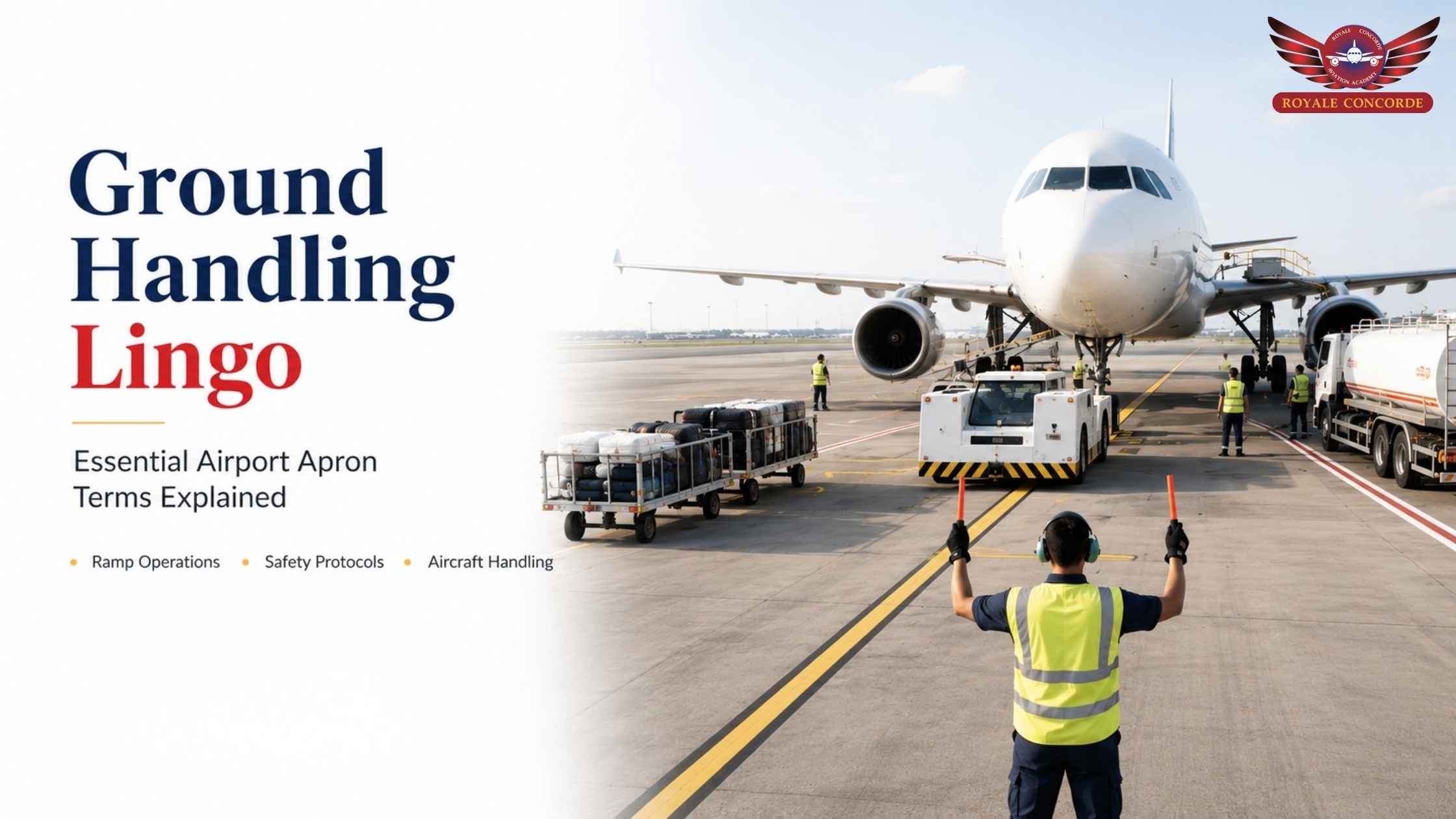
Marshalling is the language of hand signals and wands used to guide pilots as they taxi aircraft to and from stands. It is one of the most visible forms of ground handling communication.
- Ensures precise aircraft positioning for safe boarding, fueling, and servicing
- Reduces risk of collisions with equipment or structures
- Royale Concorde Aviation incorporates marshalling drills in practical training modules
Proper marshalling is not only about technical accuracy but also about confidence, clear communication, and unwavering attention to safety—qualities we instill in our students.
What Is A Pushback Tug And When Is It Used?
A pushback tug is a powerful, low-profile vehicle designed to gently push or pull aircraft away from the gate, especially when reversing under their own power is unsafe or prohibited.
- Commonly used for large commercial jets
- Prevents jet blast injuries and infrastructure damage
- Requires coordinated teamwork with cockpit crew and ground staff
Our students become proficient in recognizing, directing, and working alongside pushback tug operators, ensuring seamless aircraft movements during busy turnaround periods.
What Are Chocks And Why Are They Important?
Chocks are sturdy wedges placed in front of and behind an aircraft’s wheels to prevent accidental movement while parked. Their use is a fundamental safety measure in all airport operations.
- Chocks are positioned immediately after parking brakes are set
- Removed only after clearance is given for aircraft movement
- Royale Concorde Aviation emphasizes strict chocking procedures in every hands-on training session
Mastery of apron vocabulary like “chocks on” and “chocks off” is essential for all ramp agents and ground handlers.
How Does A GPU Support Aircraft On The Ground?
GPU, or Ground Power Unit, supplies electrical power to an aircraft while its engines are shut down. This is essential for running lighting, air conditioning, and onboard systems during passenger boarding, catering, and maintenance activities.
- Reduces unnecessary fuel burn and emissions
- Minimizes engine wear and operational costs
- Royale Concorde Aviation students practice safe GPU connection/disconnection as part of apron training
What Is A Passenger Boarding Bridge?
The passenger boarding bridge (also known as an aerobridge or jetway) is a moveable, enclosed walkway connecting the airport terminal directly to the aircraft door.
- Protects passengers from weather, noise, and apron hazards
- Improves efficiency of passenger flow and accessibility
- Requires precise alignment and operation by trained ground staff
At Royale Concorde Aviation, students learn to operate and supervise the passenger boarding bridge, ensuring passenger safety and comfort during aircraft turnaround.
What Is Airside Terminology And Why Does It Matter?
Airside terminology encompasses all specialized words and phrases used in restricted airport areas beyond security, including the apron, taxiways, and runways. Familiarity with airside terminology allows staff to navigate, communicate, and perform duties efficiently in a high-security, time-sensitive environment.
- Includes terms like “stand,” “taxiway,” “ramp,” “airside pass,” and more
- Improves operational clarity across international teams
- Royale Concorde Aviation’s curriculum emphasizes airside terminology as part of its global-standard training
How Do These Terms Impact Airport Operations?
Every term in the ground handling lingo—from FOD to passenger boarding bridge—plays a direct role in the safety, efficiency, and success of airport operations. Clear, consistent use of these terms ensures that every member of the airport team, regardless of nationality or experience, can work together seamlessly.
- Reduces operational delays and costly errors
- Enhances safety for staff, passengers, and aircraft
- Meets global aviation regulatory standards
Royale Concorde Aviation Academy’s comprehensive training in airport ground handling terms and apron vocabulary ensures our graduates are prepared for immediate deployment in leading domestic and international airports.
About Royale Concorde Aviation Academy
Royale Concorde Aviation Academy is a premier aviation training institute in Bangalore, India, specializing in cabin crew training, air hostess programs, aviation hospitality, and airport ground operations. Founded by visionaries with extensive industry experience, the academy emphasizes discipline, grooming, global exposure, and holistic career readiness.
Key highlights:
- State-of-the-art simulated aircraft cabin and apron training facilities
- Expert faculty with international airline and ground handling experience
- Industry-aligned curriculum and hands-on practical exposure
- Strong placement support and career guidance for Bangalore and India’s booming aviation sector
For more information, visit Royale Concorde Aviation Academy or call +91 7204805777.
Frequently asked questions about apron and ground handling lingo
What is FOD in airport ground handling terms?
FOD stands for Foreign Object Debris and refers to any object on the apron that could damage aircraft or equipment. Regular FOD checks are a critical safety procedure in all airport operations.
Why is apron vocabulary important for ramp agents?
Knowing apron vocabulary helps ramp agents communicate quickly and accurately, reducing miscommunication and ensuring safe, efficient aircraft turnaround on the apron.
How does a pushback tug differ from other airport vehicles?
A pushback tug is specifically designed to push or pull aircraft away from gates, preventing damage and enabling controlled movement during departure. Other vehicles serve different support roles, such as baggage or catering transport.
What is a GPU and why is it used?
A GPU (Ground Power Unit) provides electrical power to an aircraft on the ground, allowing systems to run without using the aircraft’s engines, thus saving fuel and reducing emissions.
Can Royale Concorde Aviation Academy help me master airport ground handling terms?
Absolutely. Royale Concorde Aviation Academy in Bangalore offers industry-focused, practical training in all essential apron and airport ground handling terms, preparing you for a career in airport operations and ground handling.
Frequently Asked Questions
What are the most common airport ground handling terms every ramp agent should know?
Understanding airport ground handling terms is essential for efficient and safe airport operations. Common terms include FOD (Foreign Object Debris), marshalling , pushback tug , chocks , GPU (Ground Power Unit), passenger boarding bridge , and many more. Royale Concorde Aviation provides comprehensive training and resources to help staff master this crucial apron vocabulary and enhance communication on the ramp.
How does Royale Concorde Aviation support ramp agents in learning apron vocabulary?
Royale Concorde Aviation offers detailed guides, hands-on training, and digital resources to ensure all staff understand essential apron vocabulary and airside terminology. Our ramp agent glossary is tailored to real-world scenarios, giving agents the confidence to communicate effectively and follow best practices during ground handling operations.
What is FOD and why is it critical for airport safety?
FOD stands for Foreign Object Debris, referring to any loose item that could damage aircraft or injure personnel on the apron. Preventing FOD is a key part of airport operations and safety culture. Royale Concorde Aviation implements strict FOD control procedures and regular ramp inspections to minimize risks and maintain a safe working environment for all.
How does marshalling contribute to efficient aircraft movements on the apron?
Marshalling is the visual signaling process used by trained personnel to guide aircraft during parking and departure. Correct marshalling is vital for avoiding collisions and ensuring smooth airport operations. Royale Concorde Aviation’s certified marshallers use internationally recognized signals, ensuring safety and precision on every flight movement.
What role do pushback tugs play in ground handling?
A pushback tug is a specialized vehicle used to push or tow aircraft away from the gate safely. This is an essential part of apron activities, especially in tight spaces. Royale Concorde Aviation operates a modern fleet of pushback tugs, with skilled operators to ensure aircraft are maneuvered efficiently and securely at all times.
How are chocks used and why are they important in airport operations?
Chocks are wedge-shaped blocks placed against an aircraft’s wheels to prevent movement while parked. They are a basic yet vital component of apron safety. Royale Concorde Aviation ensures that chocks are deployed promptly by trained staff, in line with international standards, to secure aircraft during all ground activities.
What is a GPU and when is it used during ground handling?
A GPU, or Ground Power Unit, supplies electrical power to aircraft while engines are off on the apron. This allows for maintenance, air conditioning, and boarding without running the engines. Royale Concorde Aviation provides reliable GPU services as part of our comprehensive ground support offerings.
How does the passenger boarding bridge enhance the boarding process?
The passenger boarding bridge connects the terminal directly to the aircraft, providing a safe and weather-protected path for passengers. Efficient use of passenger boarding bridges speeds up turnaround times and enhances passenger comfort. Royale Concorde Aviation ensures bridges are operated by skilled staff, integrating seamlessly with the airline’s schedule and apron activities.
What makes airside terminology unique, and how does Royale Concorde Aviation keep staff up-to-date?
Airside terminology includes highly specialized words and phrases unique to airport operations outside the terminal. Royale Concorde Aviation regularly updates its training materials and ramp agent glossary to reflect current industry standards, ensuring staff are fluent with evolving apron vocabulary and procedures.