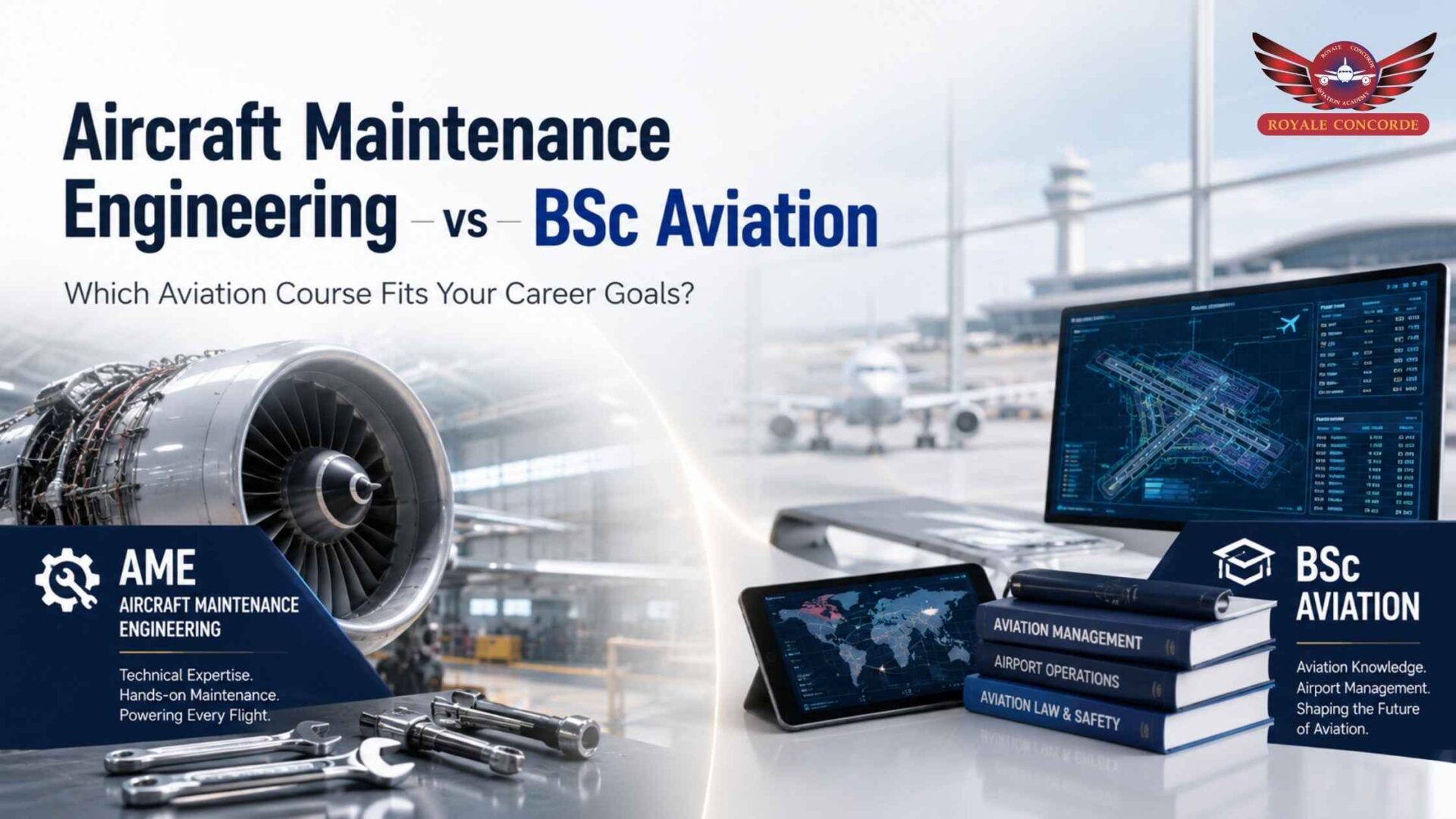
Choosing between Aircraft Maintenance Engineering and BSc Aviation is a pivotal decision for anyone aiming to build a successful career in the aviation sector. If you are exploring the difference between ame vs bsc aviation, understanding each pathway’s focus, career outcomes, and industry relevance is essential to making an informed choice that aligns with your professional ambitions. In this comprehensive guide, we compare these two prominent aviation courses, discuss industry demand and technical requirements, and explain why Royale Concorde Aviation Academy in Bangalore is the ideal place to launch your aviation journey.
Aircraft Maintenance Engineering (AME) is a technical program focused on certifying the safety and airworthiness of aircraft, while BSc Aviation is a broader academic degree covering the science and management of aviation operations.
The aircraft maintenance engineering course is regulated by aviation authorities and focuses on equipping students with the technical proficiency required to keep aircraft safe, operational, and compliant with international standards. The course emphasizes:
AME is ideal for those pursuing aviation technical careers, offering direct engagement with aircraft and a clear pathway to becoming licensed engineers responsible for safety and reliability.
A BSc aviation comparison highlights that the BSc degree is more academic, focusing on the science, management, and operations of aviation. The curriculum typically includes:
BSc Aviation is suited for students who want a comprehensive understanding of the aviation industry, with options to branch into management, airport operations, customer service, or further studies.
| Criteria | Aircraft Maintenance Engineering | BSc Aviation |
|---|---|---|
| Course Duration | 3-4 years (including practical training & licensing exams) | 3 years (academic with project work/internships) |
| Focus Area | Technical maintenance, repairs, troubleshooting | Aviation science, management, operations |
| Eligibility | 10+2 with Physics, Chemistry, Mathematics | 10+2 (any stream, science preferred) |
| Career Outcomes | Licensed Aircraft Maintenance Engineer (AME), Technical Supervisor, Quality Assurance, MRO facilities | Airport Operations Manager, Aviation Executive, Airline Customer Service, Ground Staff, Aviation Hospitality |
| Industry Demand | High for technical skills, especially MRO sector | Expanding across airline management, airport services |
| Growth Potential | High with experience and further certifications | High, especially with additional management qualifications |
If your goal is to work directly with aircraft, ensuring their safety and performance, an aircraft maintenance engineering course is the best fit for aviation technical careers. This pathway is hands-on and leads to critical roles in maintenance, repair, and overhaul (MRO) organizations, airlines, and regulatory bodies.
A BSc in Aviation is ideal if you are interested in the business, operations, or customer-facing side of aviation, or if you want a versatile degree that allows you to explore various roles in the industry.
Royale Concorde Aviation Academy (RCAA) in Bangalore is a premier aviation training institute with a mission to nurture, empower, and prepare students for the aviation industry’s dynamic requirements. The academy’s strengths include:
At RCAA, students benefit from a blend of academic rigor and real-world readiness, ensuring they are equipped for both technical and managerial aviation roles upon graduation.
It depends on your career goals. Aircraft Maintenance Engineering is best if you want a hands-on, technical role with licensing and direct responsibility for aircraft safety. BSc Aviation is suitable if you desire a broader understanding of aviation, management roles, or wish to keep options open across the industry.
Both typically require 10+2 with science subjects (PCM) for AME, while BSc Aviation may accept students from any stream (science preferred). Specific requirements can differ by academy.
AME offers direct technical career pathways with high demand, especially as India’s aviation sector grows. BSc Aviation offers diverse opportunities in management, operations, and hospitality, giving you flexibility to explore various domains.
Yes, BSc Aviation graduates can pursue commercial pilot training, provided they meet medical and regulatory requirements.
Ask yourself:
If you are still unsure, consult with career advisors at Royale Concorde Aviation Academy for personalized guidance based on your interests, strengths, and industry trends.
Royale Concorde Aviation Academy (RCAA) is a leading aviation training institute based in Bangalore, Karnataka, dedicated to shaping the next generation of aviation professionals. With a strong focus on cabin crew training, air hostess programs, aviation hospitality, and airport ground operations, RCAA stands out for its:
Whether you are interested in technical, operational, or customer-facing aviation careers, Royale Concorde Aviation Academy provides the expertise, environment, and support to launch your professional journey.
Choosing between ame vs bsc aviation is about aligning your interests, strengths, and long-term aspirations with the right educational pathway. If you are passionate about aviation technical careers and want to be at the forefront of aircraft safety and maintenance, the aircraft maintenance engineering course is your gateway. If you seek versatility, management roles, or the flexibility to branch into operations, hospitality, or even pilot training, BSc Aviation comparison suggests a broader scope.
Royale Concorde Aviation Academy in Bangalore is committed to guiding you at every step—offering quality education, real-world exposure, career mentorship, and placement support to help you soar in the aviation industry.
Location: Bangalore, Karnataka, India
Phone: +91 7204805777 / +91 7204806777
Email: mail@royaleconcordeaviation.com
Website: royaleconcordeaviation.com
The main difference lies in the focus area. The aircraft maintenance engineering course (AME) is a professional program that prepares students for hands-on technical roles involving the inspection, repair, and maintenance of aircraft. Meanwhile, BSc Aviation is a degree program covering a wider scope of aviation including management, operations, and basic technical subjects. The ame vs bsc aviation debate comes down to whether you want a technical engineering license (AME) or a broader academic degree (BSc Aviation).
If you aspire for aviation technical careers such as Licensed Aircraft Maintenance Engineer, AME is the preferred path. This course is structured to meet regulatory requirements and equips you with the technical skills and licensing needed for direct entry into technical roles. BSc Aviation, on the other hand, offers technical knowledge but is more suited for careers in aviation management, operations, or as a stepping stone to pilot training.
In a BSc aviation comparison with AME, BSc Aviation provides a holistic overview of the industry, preparing you for managerial, administrative, or ground operation roles. AME, however, is highly specialized and targets technical maintenance positions. Your career prospects depend on whether you prefer a technical, hands-on role (AME) or a broader role with opportunities in management and operations (BSc Aviation).
For the aircraft maintenance engineering course at Royale Concorde Aviation, you typically need to have completed 10+2 with Physics, Chemistry, and Mathematics. For BSc Aviation, the requirements are similar, although some institutions may accept students from other science backgrounds. Royale Concorde Aviation offers guidance and counseling to help you understand which path aligns with your academic background and career goals.
After completing AME, you can work as a Licensed Aircraft Maintenance Engineer, Quality Inspector, or Technical Officer in airlines, MROs, and aviation organizations. Completing BSc Aviation opens doors to roles such as Airport Manager, Ground Operations Executive, Air Traffic Controller (with further training), and even pilot training. Royale Concorde Aviation’s placement cell supports students in finding suitable roles in both streams.
Royale Concorde Aviation provides industry-aligned curriculum, hands-on training, and internship opportunities for both AME and BSc Aviation students. The institute also offers dedicated placement assistance, career counseling, and industry exposure through seminars and workshops, ensuring students are job-ready for both technical and non-technical aviation roles.
Yes, after completing AME, you can opt for advanced licensing or degree programs. BSc Aviation graduates can pursue postgraduate studies in aviation management, operations, or even specialized technical certifications. Royale Concorde Aviation guides students on higher education pathways based on their chosen course and career ambitions.
AME is recognized internationally, especially if your training meets standards set by global aviation authorities (like EASA or FAA, with appropriate conversions). BSc Aviation is also recognized as an academic degree, but its acceptability for technical roles abroad may depend on the specific curriculum and country. Royale Concorde Aviation’s courses are designed to prepare students for both domestic and international aviation markets.
Royale Concorde Aviation Academy goes beyond just training. we inspire passion and confidence in students to reach their full potential.
Let’s connect and create something remarkable together.
Copyright © Royale Concorde Aviation. All Rights Reserved. Run by Widepool.