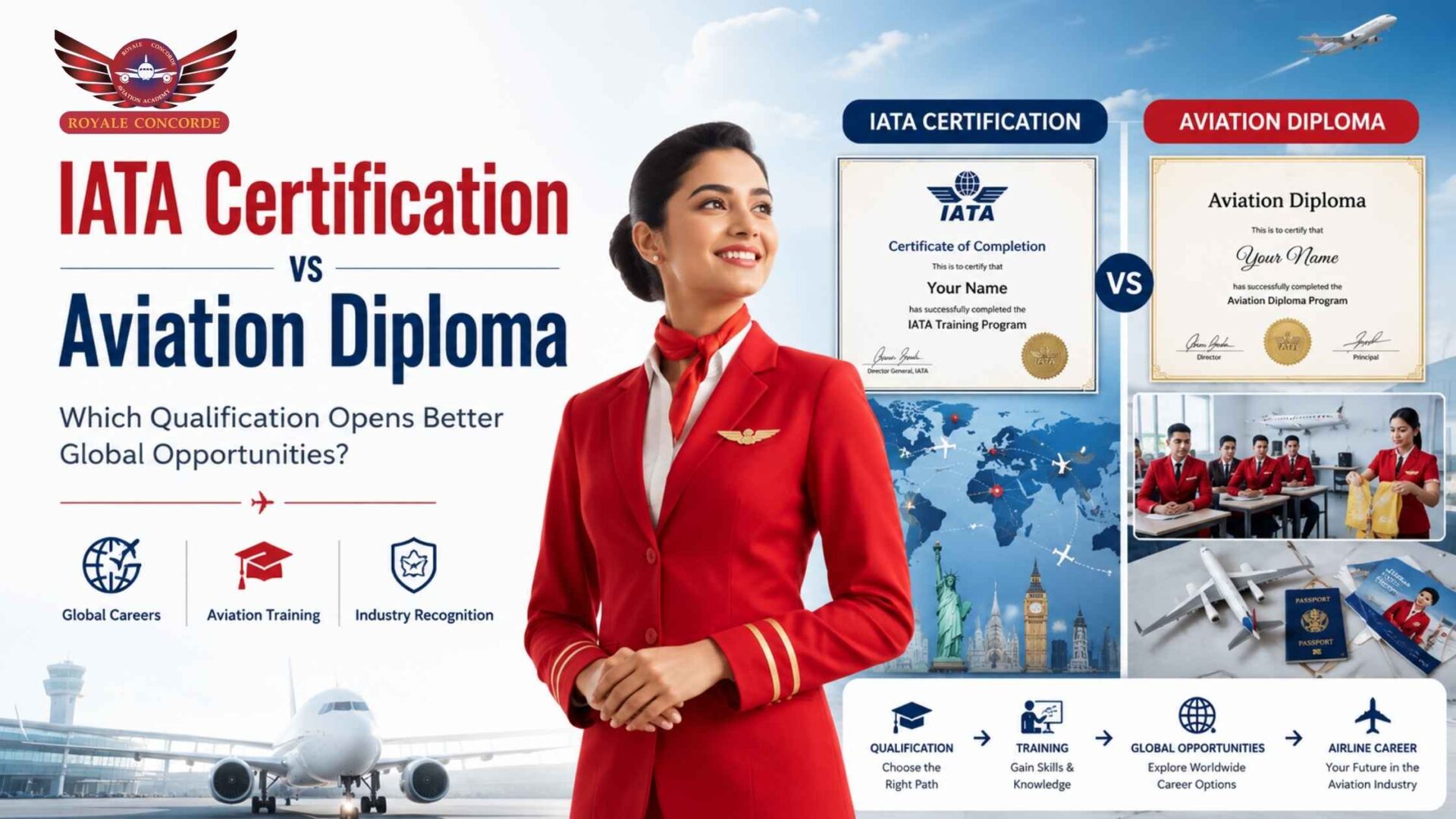
If you are considering a career in the aviation industry, the decision between pursuing iata certification vs diploma can be crucial to your future success. In the first few sentences: IATA Certification is often recognized globally by airlines and international aviation authorities, while Aviation Diplomas provide a broader academic foundation. The best option for you depends on your career goals, desired job roles, and the type of international exposure you seek in aviation.
IATA aviation certification is a specialized, globally recognized credential issued by the International Air Transport Association (IATA). It is designed specifically for those looking to work with airlines, airports, travel agencies, and related sectors. IATA’s curriculum is continually updated to reflect international standards, making it highly relevant for roles such as ticketing, cargo, ground operations, and airline management.
An aviation diploma, on the other hand, is an academic qualification awarded by universities, colleges, or aviation institutes like Royale Concorde Aviation Academy (RCAA). It covers a broad spectrum of aviation topics, ranging from ground operations, safety, hospitality, to management and customer service. Diplomas typically combine theory with practical training, preparing students for multiple aviation roles.
When making an aviation diploma comparison, consider factors such as curriculum, industry relevance, global recognition, and placement support. While IATA certification is ideal for those who want specialized, job-oriented training with international credibility, an aviation diploma offers a more comprehensive education that may include modules on communication, leadership, and hospitality.
Airline certification courses refer to structured training programs—like those offered by Royale Concorde Aviation Academy—that prepare students for specific airline roles. These courses ensure students meet the skill sets and standards required by domestic and international airlines. Typical components include safety procedures, customer handling, aviation English, and emergency management.
The demand for international aviation training is growing as airlines seek professionals who can operate in diverse, multicultural environments. Training that meets global standards—like that at Royale Concorde Aviation Academy—prepares students for opportunities with both Indian and international airlines. This training focuses on service excellence, safety, cross-cultural communication, and adaptability.
Royale Concorde Aviation Academy (RCAA) is a leading aviation career academy in Bangalore, India. RCAA combines industry-aligned curriculum, practical exposure, and a career development focus to prepare students for both domestic and international aviation roles.
The decision between iata certification vs diploma depends on your specific career goals:
| Criteria | IATA Certification | Aviation Diploma |
|---|---|---|
| Recognition | Globally recognized by airlines and aviation organizations | Recognized by academic and industry bodies, may vary by country |
| Curriculum | Specialized, job-oriented, focused on airline operations | Comprehensive, includes theory, management, hospitality, and communication |
| Career Focus | Ticketing, cargo, ground operations, airline management | Cabin crew, airport management, customer service, hospitality |
| Training Style | Short-term, skill-based | Longer duration, academic plus practical |
| Cost | Generally lower; modular | Varies; may be higher due to broader scope |
| Best For | Immediate airline job readiness; international jobs | Comprehensive industry entry; career flexibility |
Royale Concorde Aviation Academy distinguishes itself through a focus on real-world readiness, professional grooming, and global employability:
RCAA’s curriculum is designed to help students become airline-ready professionals with the confidence and competence to excel in any part of the world.
IATA certification is often preferred by international airlines for roles in ticketing, ground operations, and airline management due to its global recognition. However, an aviation diploma offers a broader foundation, opening doors to a wider array of aviation careers, including hospitality and airport management.
Graduates can pursue roles such as cabin crew, flight attendant, airline customer service executive, airport ground staff, and aviation hospitality professional. The global industry recognition of airline certification courses, particularly those aligned with IATA, ensures that students are employable worldwide.
International aviation training equips students with the skills and cultural awareness required to succeed in multinational environments. This includes exposure to global service standards, cross-cultural communication, and international safety procedures, making graduates attractive to airlines worldwide.
Bangalore is a major aviation hub in India with robust airline operations and connectivity. The city’s aviation ecosystem and demand for skilled professionals make it an ideal location for comprehensive aviation education, such as that offered by Royale Concorde Aviation Academy.
Royale Concorde Aviation Academy is a premier aviation training institute based in Bangalore, Karnataka. The academy is recognized for its excellence in cabin crew, air hostess, and aviation hospitality training, and for producing industry-ready professionals who succeed in both domestic and international aviation sectors.
The choice between iata certification vs diploma ultimately depends on your career aspirations:
With a focus on industry relevance, practical training, and global employability, RCAA stands as Bangalore’s leading destination for future aviation professionals.
The main difference lies in their focus and recognition. IATA aviation certification is globally recognized and specialized, designed by the International Air Transport Association to meet international airline and airport standards. An aviation diploma, on the other hand, is typically offered by academic institutions and covers a broader curriculum, including technical and business aspects of aviation. When considering iata certification vs diploma , it’s important to evaluate whether you prefer international industry-specific credentials or an academic foundation.
If your goal is to work with international airlines or airports, IATA aviation certification is often favored by employers because it aligns with global industry standards. However, an aviation diploma can be valuable if you seek a broader knowledge base or plan to pursue further studies. Royale Concorde Aviation offers guidance and programs tailored for both tracks, maximizing your international aviation training opportunities.
Royale Concorde Aviation provides expert counseling and career guidance to help students understand the aviation diploma comparison and the benefits of IATA certification. Our advisors assess your career goals, interests, and preferred job roles, helping you select the most suitable qualification and airline certification courses for your aspirations.
Absolutely! Many students enhance their employability by pursuing both. Royale Concorde Aviation offers flexible pathways that allow you to gain an aviation diploma while earning IATA certification. This dual approach strengthens both your academic background and international industry credentials.
Yes, airline certification courses from IATA are internationally recognized and highly valued by airlines, airports, and aviation service providers across the globe. They demonstrate your understanding of global best practices and compliance with international standards, making you a strong candidate for overseas opportunities.
Entry requirements vary by program. Most IATA certification courses require a minimum educational qualification (such as completion of 10+2), while aviation diploma programs may have additional academic prerequisites. Royale Concorde Aviation assists you in understanding and meeting these requirements so you can smoothly start your chosen international aviation training path.
Our placement cell works closely with international airlines, airports, and aviation companies to connect qualified graduates with global job opportunities. Whether you choose IATA certification or an aviation diploma, we offer interview preparation, CV building, and direct job referrals to help you secure positions worldwide.
Yes, Royale Concorde Aviation specializes in international aviation training through both IATA certification and diploma programs. Our courses are designed to meet global standards and prepare students for careers in the international aviation industry, with curriculum updates in line with current airline practices.
You can apply directly on our website or visit our campus for a personal consultation. Our admissions team will guide you through the application process, required documents, and help you choose between IATA certification vs diploma based on your career interests.
Royale Concorde Aviation Academy goes beyond just training. we inspire passion and confidence in students to reach their full potential.
Let’s connect and create something remarkable together.
Copyright © Royale Concorde Aviation. All Rights Reserved. Run by Widepool.