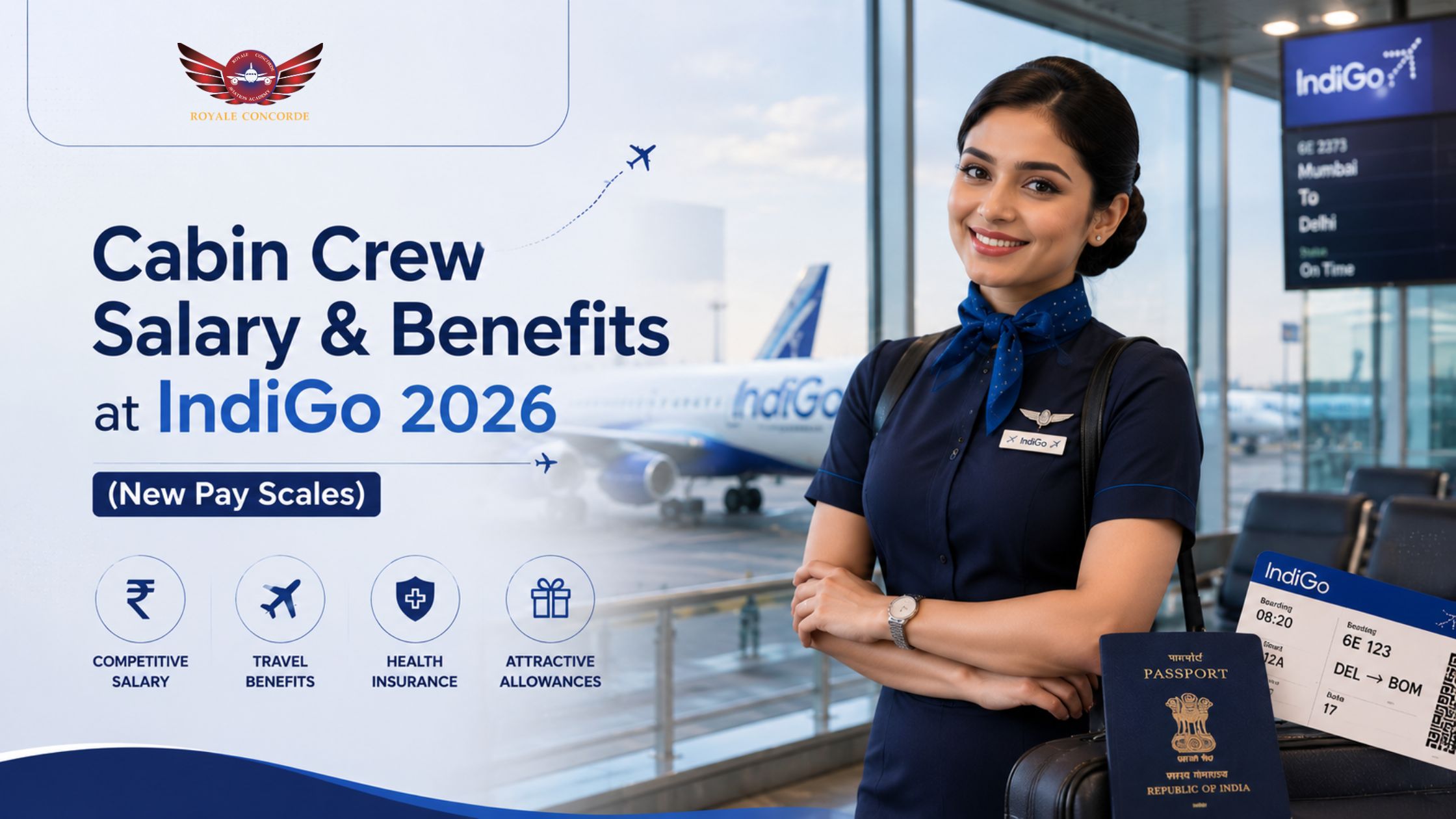
IndiGo Cabin Crew Salary 2026 is one of the most searched aviation career topics among aspiring cabin crew professionals in India. IndiGo continues to remain one of the largest employers in the Indian aviation sector, offering structured salary packages, attractive incentives, travel benefits, and long-term career growth opportunities for cabin crew members.
For students planning to enter the aviation industry, understanding salary structures, airline expectations, and training requirements is extremely important. Royale Concorde Aviation Academy in Bangalore helps aspiring aviation professionals prepare for airline recruitment with industry-oriented training, grooming, communication development, and practical aviation exposure.
What is the IndiGo cabin crew salary in 2026?
The average starting salary for IndiGo cabin crew members in 2026 can range between ₹35,000 and ₹65,000 per month depending on experience, flight routes, allowances, incentives, and operational schedules. Salary structures may vary based on domestic or international assignments, flying hours, and additional airline performance components.
The updated compensation structure generally includes:
- Basic salary
- Monthly incentives
- flying allowance
- layover pay
- Performance bonuses
- Travel concessions
- Medical and insurance support
- Additional flight duty compensation
As airlines expand operations and increase passenger volumes, cabin crew compensation packages continue evolving to attract skilled professionals with strong customer service and safety management abilities.
How does the salary structure work for cabin crew?
Cabin crew salaries are usually divided into fixed and variable components. The fixed component includes the basic monthly salary, while variable income depends on flight schedules, routes, overnight stays, incentives, and operational performance.
| Salary Component | Description |
|---|---|
| Basic Salary | Fixed monthly compensation |
| flying allowance | Additional payment based on flying hours |
| layover pay | Compensation during overnight stays |
| Performance Incentives | Rewards linked to operational performance |
| Travel Benefits | Discounted or complimentary travel opportunities |
| Meal Allowances | Duty-based meal support |
The aviation industry values punctuality, customer service excellence, grooming standards, and emergency preparedness. Professionals who consistently perform well often receive better route allocations and career advancement opportunities.
What are the major flight attendant perks offered by airlines?
One of the biggest attractions of aviation careers is the range of flight attendant perks available to cabin crew members. Apart from salary, airline professionals often enjoy lifestyle and travel-related advantages that many traditional careers may not offer.
Common airline benefits include:
- Discounted domestic and international air travel
- Hotel accommodation during layovers
- Meal and transport allowances
- Medical insurance coverage
- Career growth opportunities
- Flexible work schedules
- Professional grooming exposure
- Global travel experience
- Networking opportunities
- Multi-cultural workplace environment
These flight attendant perks contribute significantly to the overall attractiveness of cabin crew careers, especially for students who enjoy travel, hospitality, communication, and customer interaction.
Why is flying allowance important for cabin crew income?
The flying allowance component plays a major role in increasing monthly earnings for cabin crew members. Since airline operations are performance and schedule driven, flying hours directly influence monthly compensation.
Cabin crew professionals assigned to busy schedules or high-frequency sectors may earn significantly higher monthly payouts compared to minimum guaranteed salary structures.
Factors affecting flying allowance include:
- Total monthly flying hours
- Domestic or international routes
- Peak travel season schedules
- Special assignments
- Additional duty hours
- Operational efficiency
This performance-based structure encourages professionalism, punctuality, operational readiness, and service excellence.
What is layover pay in aviation careers?
layover pay refers to compensation provided to cabin crew members when flights require overnight stays away from their home base. Airlines typically provide hotel accommodation, transportation, and additional allowances during these assignments.
International routes generally involve longer layovers and may include higher compensation structures depending on destination policies and airline operational guidelines.
Benefits associated with layovers often include:
- Hotel stays arranged by airlines
- Meal allowances
- Transport arrangements
- Rest periods before next duty
- International exposure
- Travel experience
For many aspiring aviation professionals, these travel opportunities form a major motivational factor when pursuing cabin crew careers.
What is the difference between international vs domestic pay?
The topic of international vs domestic pay is extremely important for aspiring cabin crew professionals because route assignments can influence total earnings, allowances, and benefits.
International routes often involve:
- Higher allowance structures
- Foreign currency benefits
- Long-haul compensation models
- Extended layover benefits
- International hospitality exposure
Domestic operations, meanwhile, may offer:
- Frequent flying schedules
- Consistent monthly operations
- Short turnaround flights
- Faster operational rhythm
- Reduced overnight stays
When discussing international vs domestic pay, it is important to understand that compensation depends on multiple operational variables rather than a single fixed figure.
How can students prepare for airline recruitment successfully?
Airlines look beyond academic qualifications when hiring cabin crew professionals. Personality, communication skills, confidence, grooming, customer service orientation, and emergency response readiness all play major roles during recruitment.
Royale Concorde Aviation Academy provides specialized aviation training designed to prepare students for modern airline recruitment standards.
Training areas include:
- Cabin crew grooming
- Passenger handling techniques
- Aviation hospitality
- Emergency and safety procedures
- Interview preparation
- English communication skills
- Confidence development
- Body language training
- Professional etiquette
The academy’s practical learning environment helps students develop real-world operational confidence before entering airline recruitment processes.
Why are communication skills important for cabin crew?
Cabin crew members interact with passengers from different cultural and linguistic backgrounds daily. Effective communication improves passenger satisfaction, operational coordination, and onboard safety management.
Professional communication training helps aspiring cabin crew professionals:
- Handle passenger concerns professionally
- Deliver safety instructions clearly
- Maintain calm during emergencies
- Improve interview performance
- Build confidence during public interaction
Royale Concorde Aviation Academy emphasizes communication enhancement as a core component of aviation career preparation.
What career growth opportunities are available after joining as cabin crew?
Cabin crew careers offer multiple growth pathways within the aviation industry. With experience and consistent performance, professionals may progress into senior operational and leadership roles.
Possible career advancement roles include:
- Senior Cabin Crew
- Cabin Supervisor
- Inflight Manager
- Training Instructor
- Ground Operations Executive
- Aviation Hospitality Trainer
- Corporate Aviation Professional
Many experienced cabin crew professionals eventually move into airline management, luxury hospitality, aviation recruitment, and customer experience leadership roles.
Why choose Royale Concorde Aviation Academy in Bangalore?
Royale Concorde Aviation Academy is a premier aviation training institute based in Bangalore, Karnataka, specializing in cabin crew training, aviation hospitality, airport operations, and personality development.
The academy focuses on building airline-ready professionals through practical learning methodologies and industry-oriented training programs.
Key advantages of training with Royale Concorde Aviation Academy:
- Industry-focused aviation curriculum
- Practical simulation-based training
- Professional grooming support
- Interview preparation workshops
- Mock airline assessments
- Communication and personality development
- Career guidance and placement support
- Exposure to airline operational standards
The academy’s learning environment is designed to help students transition confidently into aviation careers while understanding modern airline expectations.
About Royale Concorde Aviation Academy
Royale Concorde Aviation Academy is a structured aviation training institution located in Bangalore, Karnataka, India. The academy specializes in cabin crew training, air hostess programs, aviation hospitality, safety procedures, and airport operations training.
Founded under the leadership of Shri L. R. Shivarame Gowda, the institution focuses on nurturing confident, skilled, and professional aviation talent prepared for domestic and international airline careers.
With modern infrastructure, practical aviation simulations, grooming studios, and interview-focused development programs, Royale Concorde Aviation Academy continues supporting aspiring aviation professionals in building successful careers within the airline industry.
Contact Royale Concorde Aviation Academy
Location: Bangalore, Karnataka, India
Phone: +91 7204805777 / +91 7204806777
Email: mail@royaleconcordeaviation.com
Frequently Asked Questions
What is the expected IndiGo Cabin Crew Salary 2026 for freshers?
The IndiGo Cabin Crew Salary 2026 structure for freshers is expected to include a fixed monthly salary along with additional performance-linked earnings. New cabin crew members may also receive extra income through flying allowance, incentives, and overnight duty compensation depending on roster schedules and total flying hours.
Royale Concorde Aviation helps aspiring cabin crew candidates understand the latest airline recruitment standards, salary expectations, grooming requirements, and interview preparation strategies so they can confidently apply for leading airlines such as IndiGo.
What benefits do cabin crew members receive apart from salary?
In addition to monthly pay, airline employees often enjoy several flight attendant perks including discounted air travel, medical benefits, hotel accommodation during layovers, meal allowances, transport facilities, and career growth opportunities within the aviation industry.
Students trained at Royale Concorde Aviation are guided on how airline compensation packages work in real-world scenarios, helping them prepare for both domestic and international aviation careers.
How does flying allowance affect total cabin crew earnings?
flying allowance is one of the most important components of a cabin crew salary package. It is generally calculated based on the number of flight hours completed each month. Cabin crew members with higher flying hours usually earn more than the fixed base salary.
This means that a well-performing crew member who regularly operates flights can significantly increase monthly earnings over time. Royale Concorde Aviation educates students on how airline pay structures are calculated so they can better understand the earning potential in aviation careers.
What is layover pay and why is it important for cabin crew?
layover pay refers to the additional compensation cabin crew members may receive when they stay overnight at another destination during duty schedules. This amount can vary depending on airline policy, city category, and duration of the layover.
Besides extra earnings, layovers also provide opportunities for crew members to experience different cities, cultures, and travel environments. Royale Concorde Aviation explains these operational aspects during cabin crew training to give students realistic expectations before joining the industry.
Is there a difference between international and domestic airline salaries?
Yes, international vs domestic pay can vary considerably depending on the airline, route network, allowances, and working hours. International cabin crew members may receive higher travel allowances, foreign currency payments, and extended layover compensation compared to domestic operations.
However, domestic airlines such as IndiGo also provide competitive salary structures and strong career progression opportunities. Royale Concorde Aviation prepares candidates for both domestic and international airline recruitment pathways.
Does experience increase cabin crew salary over time?
Yes, experience plays a major role in salary growth within the aviation industry. As cabin crew members gain operational knowledge and seniority, they may receive higher pay scales, leadership responsibilities, additional incentives, and opportunities to become senior cabin crew or trainers.
Royale Concorde Aviation focuses on communication skills, grooming standards, safety awareness, and interview preparation to help students build a long-term aviation career rather than simply securing an entry-level role.
How can Royale Concorde Aviation help students prepare for airline jobs?
Royale Concorde Aviation provides structured aviation training designed to help students meet modern airline recruitment standards. Training programs typically include personality development, spoken English improvement, customer service techniques, grooming guidance, aviation etiquette, and mock interview preparation.
The institute also helps candidates understand airline work culture, salary structures, scheduling systems, and professional expectations so they can confidently pursue opportunities with leading airlines like IndiGo.
What qualities do airlines look for in cabin crew candidates?
Airlines generally look for candidates with strong communication skills, confidence, professional grooming, customer service ability, teamwork, and a calm attitude under pressure. Physical fitness and flexibility for rotational schedules are also important in aviation careers.
Royale Concorde Aviation trains students to develop these qualities through practical sessions, interview coaching, and industry-focused preparation that aligns with current airline hiring expectations in 2026.